
Using Calculus in Building Design: How Math Shapes Architecture and Engineering
Explore how calculus shapes modern architecture and engineering, from structural analysis to lighting design. Learn how EVstudio integrates math into building design.
Using Calculus in Building Design: How Math Shapes Architecture and Engineering
When most people think of architecture and engineering, they picture blueprints, CAD software, and construction sites. But behind every elegant curve and sturdy beam lies a powerful tool: calculus. This branch of mathematics plays a critical role in shaping the buildings we live and work in.
What Is Calculus Doing in Architecture?
Calculus helps architects and engineers understand how structures behave under various conditions. It’s used to:
Model curves and surfaces for complex building shapes
Calculate loads and stresses on beams and columns
Optimize materials and design for efficiency and sustainability
Simulate environmental factors like wind, heat, and light
For example, when designing a cantilevered balcony, engineers use calculus to determine how much it will bend under weight and how to reinforce it.
Real-World Applications
Here are a few ways calculus shows up in everyday building design:
Structural Analysis: Calculus helps determine how forces move through a structure, ensuring it can withstand loads without failure.
Lighting Design: Architects use integrals to calculate how much natural light enters a space through windows and skylights.
HVAC Systems: Engineers use differential equations to model airflow and temperature changes in buildings.
Acoustics: Calculus helps design spaces with optimal sound distribution, especially in theaters and auditoriums.
Case Study: Curved Roof Design
EVstudio recently worked on a project featuring a sweeping curved roof. To achieve the desired aesthetic and structural integrity, our engineers used calculus to:
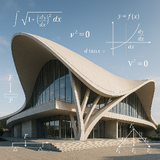
Model the roof’s curvature using parametric equations
Calculate the load distribution across the surface
Optimize the thickness and material of the roof structure
The result was a visually stunning and structurally sound design that met both artistic and engineering goals.
Written by: Jim Houlette