Built to Last: Lessons from Ireland’s Historic Structures
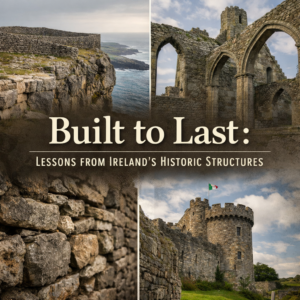
Across Ireland, centuries-old structures still stand strong against time, weather, and use. From rugged coastal forts to medieval abbeys, these buildings were not designed with modern technology—yet many have outlasted contemporary construction. Their longevity offers valuable insight for today’s architecture and engineering (A/E) professionals.
While building codes, materials, and technologies have evolved, the core principles behind these historic structures remain highly relevant. Durability, adaptability, and thoughtful design continue to define projects that truly stand the test of time.
Material Matters: Building for Longevity
One of the most defining characteristics of Irish historic structures is their use of locally sourced stone. This material was not only abundant but also well-suited to Ireland’s climate—resistant to moisture, wind, and coastal conditions.
Stone construction provided:
-
Thermal mass, helping regulate interior temperatures
-
Moisture resistance in consistently wet environments
-
Structural integrity capable of lasting centuries
Today, while materials have expanded far beyond stone, the lesson remains the same: selecting the right material for the environment is critical to long-term performance.
Designing for Harsh Conditions
Ireland’s climate—marked by high winds, heavy rain, and coastal exposure—demanded resilience. Builders responded with thick walls, minimal openings, and forms that reduced structural stress.
Modern A/E teams face similar challenges, whether designing for mountain climates in Colorado or coastal developments elsewhere. By prioritizing environmental response early in the design process, teams can reduce maintenance needs, improve performance, and extend building lifespans.
Simplicity and Function
Many historic Irish structures reflect a straightforward approach to design: form follows function. These buildings were constructed with purpose, minimizing unnecessary complexity while maximizing durability.
In today’s projects, simplicity can still be a powerful strategy. Efficient layouts, clear structural systems, and coordinated design across disciplines often lead to more resilient and cost-effective outcomes.
Applying Historic Lessons to Modern Design
At EVstudio, we approach projects with a focus on long-term value. While modern tools allow for greater efficiency and precision, the fundamentals remain unchanged:
-
Design for the environment
-
Select materials intentionally
-
Coordinate across disciplines early
-
Prioritize durability and performance
Ireland’s historic structures remind us that successful buildings are not defined by trends or luck—they are shaped by thoughtful, intentional design.
Looking Ahead
As the A/E industry continues to innovate, there is value in looking back. By combining time-tested principles with modern technology, we can create buildings that not only meet today’s needs but continue to perform for generations to come.