Vented or unvented Crawl space?
First and foremost, let’s define what a crawl space is. A crawl space is a shallow, unfinished area between the ground and the first floor of a house, usually 1 to 3 feet high. It provides access to plumbing, electrical, and HVAC systems, and helps protect the home from ground moisture and pests. The term “crawl” space refers to its low height, which requires occupants to crawl rather than stand.
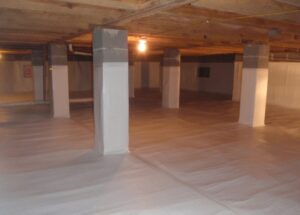
Building an Unvented Crawlspace, Green Building Advisors
Vented Crawl Space
Crawl spaces are essential structural elements in buildings and are typically classified as either vented or conditioned. Vented crawl spaces are partially open to promote air circulation and use passive airflow to manage temperature and moisture. In contrast, conditioned or encapsulated crawl spaces are sealed from outside air and rely on internal conditioned air.
Vented crawl spaces are designed to promote air circulation beneath a structure. Perimeter vents enable external air to enter, helping to prevent moisture buildup and reduce the risk of mold and decay. This passive system allows stale, moist air to exit through other vents, keeping the crawl space dry and temperature regulated. The International Residential Code (IRC R408.2) requires that the minimum net area of ventilation opening shall be not less than 1 square foot for every 150 square feet of underfloor area. One ventilation opening shall be within 3 feet of each external corner of the underfloor space. The total area of the ventilation opening shall be permitted to be reduced to 1/1,500 of the underfloor where the ground surface is covered with an approved class I vapor retarder material.
Unfortunately, vented crawl spaces rarely function as intended. In many cases, they lack sufficient circulation to effectively remove moisture. However, there are limited circumstances in which a vented crawl space may be appropriate.
Unvented Crawl Space
An unvented crawl space, also called a conditioned or encapsulated crawl space, is sealed from outside air to create a controlled environment similar to a short basement. This approach improves energy efficiency, comfort, and durability by eliminating moisture problems found in traditional vented crawl spaces. Essential features include a strong vapor barrier on the ground, perimeter wall insulation, and conditioning with air from the home’s HVAC system or a dehumidifier. These measures help maintain dryness, prevent condensation, protect pipes from freezing, and deter pests.
The International Building Code (IRC R408.3) requires that exposed earth be covered with a continuous Class I vapor retarder. Joints of the vapor retarder shall overlap by 6 inches and shall be sealed or taped. Other requirements, such as continuously operating mechanical exhaust ventilation or dehumidification, should be provided in addition to the class I vapor.
Conclusion
Vented crawl spaces circulate outside air to manage moisture in dry climates, but they often fail in humid areas, resulting in mold, pests, and energy loss. Unvented (sealed or encapsulated) crawl spaces block outside air and use a vapor barrier to create a controlled environment. This approach significantly improves air quality, energy efficiency, pest control, and durability by keeping the space dry and consistent with the home’s interior. For most climates, unvented crawl spaces are the preferred modern solution.
Written by: Abraham Meshesha