
Understanding Cap Rates in Real Estate
What Is a Cap Rate?
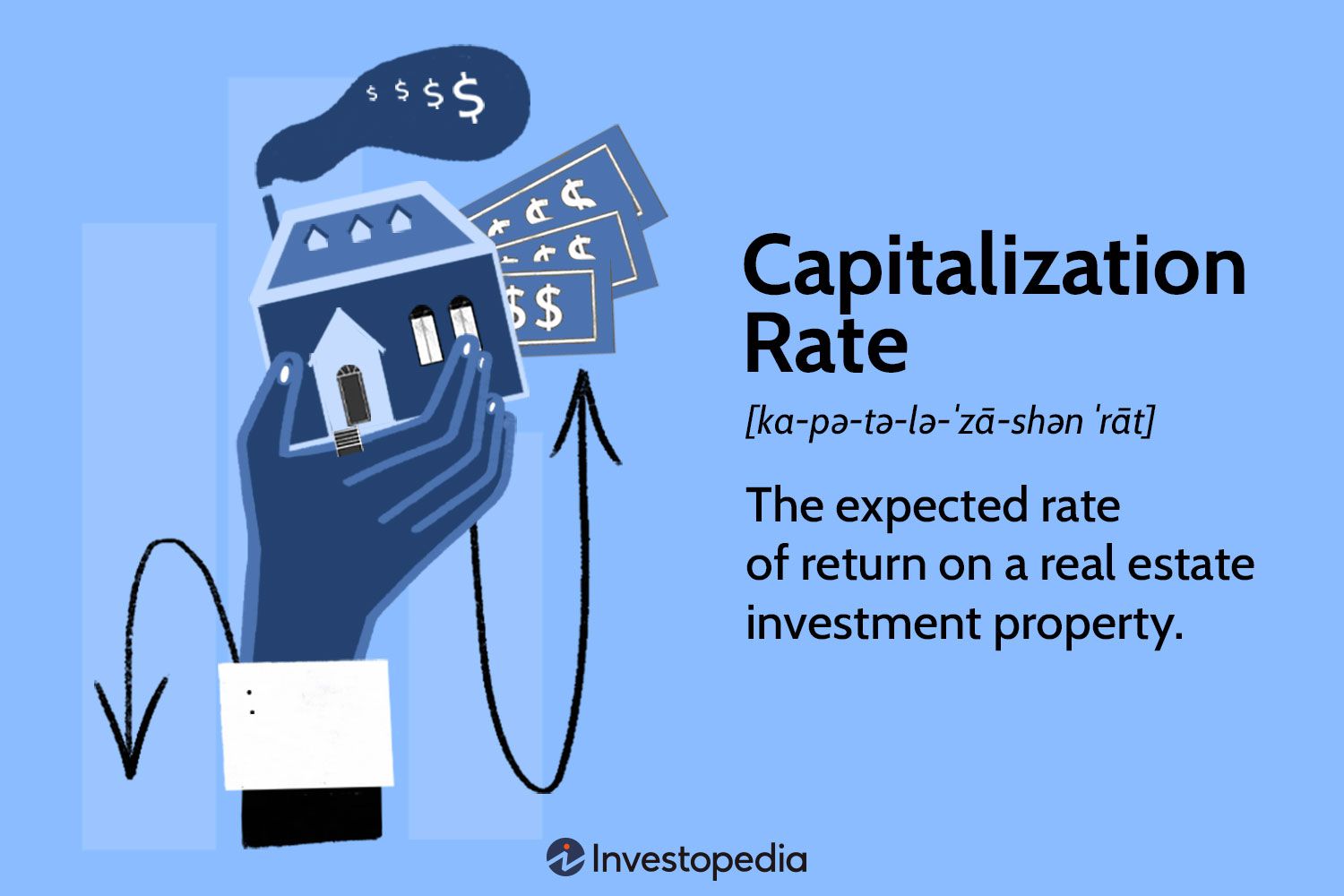
A cap rate, or capitalization rate, expresses a property’s expected return as a percentage. It shows how much income a property might generate relative to its value.
You calculate it by dividing Net Operating Income (NOI) by the property’s current market value.
In formula form:
Cap Rate = NOI ÷ Market Value × 100
For example, if a property produces $100,000 in NOI and its market value is $2,000,000, its cap rate is 5%.
How Cap Rates Are Used
Cap rates help investors compare properties quickly.
-
They act as a shorthand metric for yield or return.
-
They support valuation: investors can invert the formula (NOI ÷ cap rate) to estimate what a property should be worth.
-
They reveal risk: a higher cap rate often suggests higher risk or less demand, while a lower cap rate implies safer or more desirable assets.
-
They exclude debt: cap rate is an unlevered metric. It ignores mortgage costs, focusing only on property operations.
However, cap rates do not handle future growth, financing structure, or unusual income/expense fluctuations.
Step-by-Step: Calculating Cap Rate
-
Estimate gross annual income. Include rent, fees, and other property income sources.
-
Subtract operating expenses. Exclude debt service, depreciation, and income taxes.
-
Obtain NOI. That’s (income minus expenses).
-
Divide NOI by market value. (NOI ÷ value)
-
Convert to percentage. Multiply result by 100.
For instance, a property with $80,000 NOI and a $1,600,000 value results in a 5% cap rate.
You can also derive value:
Value = NOI ÷ Cap Rate
If similar buildings trade at 6% cap rates, a $120,000 NOI suggests value near $2,000,000.
Cap Rates in Practice: Tips and Caveats
-
Compare cap rates only among properties in similar markets and classes.
-
Watch for vacancy adjustments, reserve funds, and maintenance costs in NOI.
-
Be careful in transitional or timing-sensitive markets—cap rates may shift rapidly.
-
Use cap rates alongside discounted cash flow (DCF) and other valuation tools.
-
Recognize that cap compression can happen: demand pushes property values up and cap rates down.
Closing Thoughts
Cap rates offer a clear, immediate lens on income properties. When used correctly, they guide comparisons and valuation. But they are not a complete tool. Always supplement cap rate analysis with deeper cash flow modeling and market insight.
References: