Designing for What’s Next: Why Adaptability is the Future of Building Design
As the built environment continues to evolve, one thing is becoming increasingly clear: the most successful buildings are not just designed for today—they are designed for what comes next.
From shifting market demands to evolving community needs, buildings that can adapt over time deliver more long-term value, reduce lifecycle costs, and remain relevant far beyond their initial use.
At EVstudio, adaptability is not an afterthought. It is a design strategy.
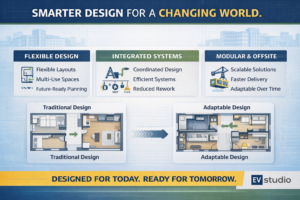
The Problem with Static Design
Traditional buildings are often designed with a single, fixed purpose in mind. While this approach may meet immediate needs, it can quickly become a limitation.
Market conditions change. Tenant expectations evolve. Communities grow.
When buildings cannot keep up, they require costly renovations—or worse, complete redevelopment.
This creates unnecessary waste, extended downtime, and missed opportunities for owners and developers.
What Does Adaptable Design Look Like?
Adaptable design is about creating buildings that can evolve without starting over.
This can include:
- Flexible floor plans that support multiple uses
- Structural systems designed for future modifications
- MEP systems that allow for easy reconfiguration
- Building layouts that anticipate expansion or conversion
Instead of designing for a single outcome, adaptable buildings are designed for a range of possibilities.
How Integrated Design Makes It Possible
One of the biggest challenges in adaptable design is coordination.
That is where EVstudio’s integrated approach makes a difference.
By bringing architecture, structural engineering, MEP, and civil design together from day one, teams can:
- Align systems for long-term flexibility
- Reduce conflicts during future modifications
- Improve efficiency across the building lifecycle
This collaborative process ensures that adaptability is built into the project—not added later.
And that leads to smarter, more resilient outcomes.
Adaptability + Offsite = Even Greater Value
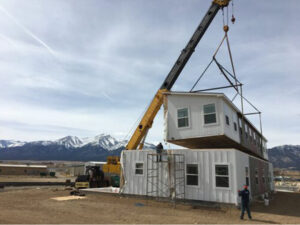
Adaptable design becomes even more powerful when paired with offsite construction.
Modular systems already rely on repeatable, efficient design. When those systems are also designed for flexibility, the benefits multiply:
- Faster delivery timelines
- Reduced material waste
- Scalable solutions for growing communities
- Easier upgrades or reconfigurations over time
Because modular construction happens in controlled environments, it also improves consistency and quality while minimizing delays.
A Smarter Investment for Owners
For owners and developers, adaptability is not just a design feature—it is a financial strategy.
Buildings that can evolve over time offer:
- Lower long-term capital costs
- Greater resilience to market shifts
- Increased asset longevity
- Stronger return on investment
Instead of designing for a single moment, adaptable buildings continue to perform for decades.
Looking Ahead
The future of design is not just faster or more efficient—it is more flexible.
As communities, technologies, and industries continue to change, buildings must be able to change with them.
At EVstudio, we believe the best projects are those that are ready for what’s next—before it arrives.