
Frost Depth in Colorado: Why Your Foundation Depth Depends on Where You Build
Has frost heave ever moved one of your foundations? We hope not. When the ground decides to shift a foundation, it never sends a change order first.
That’s why one question comes up on almost every Colorado foundation design: how deep does it need to go? The answer sounds simple. However, Colorado’s varied climate and local building codes make frost depth in Colorado more complicated than most people realize.
Why Frost Depth Matters
Frost depth matters because freezing temperatures turn soil moisture into ice, and ice expands. When that expansion happens beneath a foundation, it can cause frost heave. As a result, the structure can shift, crack, or suffer other damage.
There Isn’t One Frost Depth for All of Colorado
Colorado has no single frost depth that applies statewide. Instead, the adopted building code and the local jurisdiction set the climatic and geographic design criteria for each project.
Both the International Residential Code (IRC) and the International Building Code (IBC) require foundations to be protected from frost. The most common method extends the foundation below the frost line set by the local jurisdiction. Other approved approaches include frost-protected foundations, designs that comply with ASCE 32, and construction on solid rock.
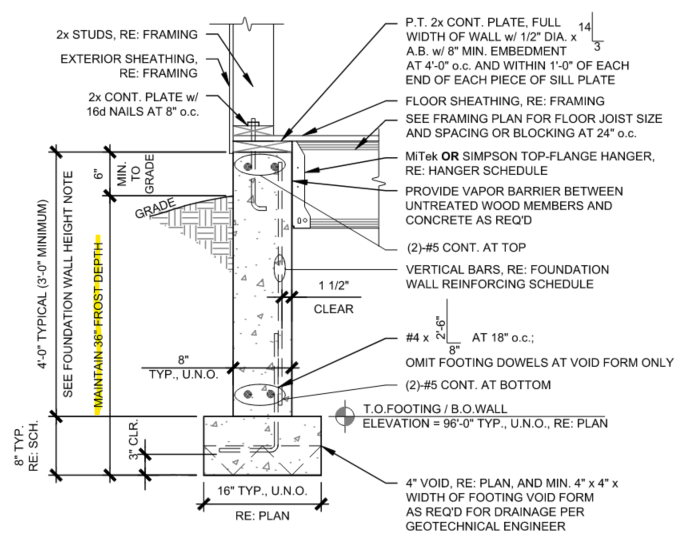
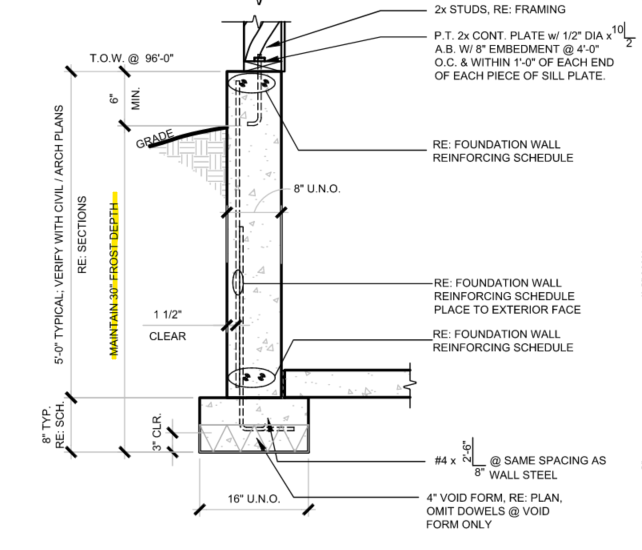
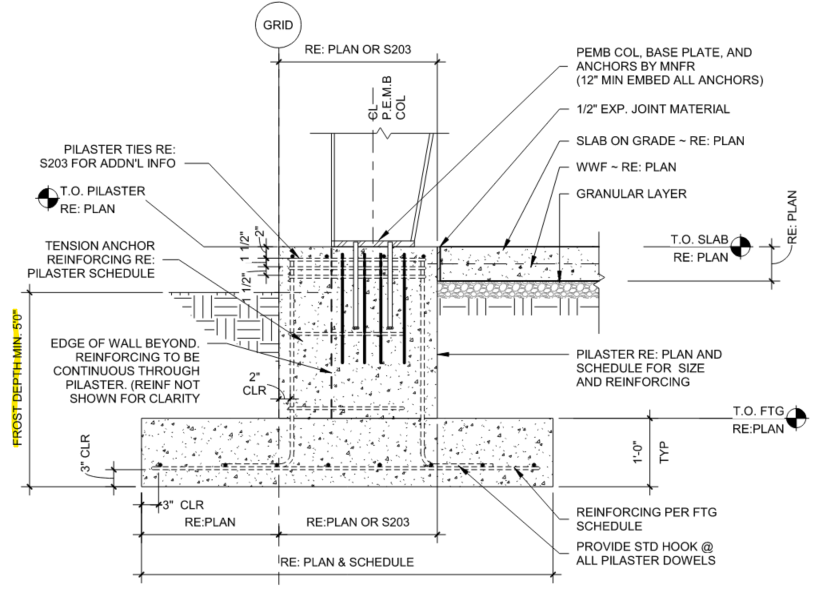
That distinction matters a lot in Colorado. For example, here’s how three jurisdictions’ frost depths show up in EVstudio foundation details.
Denver: 36-Inch Frost Line
Fort Collins: 30-Inch Frost Line
Ouray: 60-Inch Frost Line
Why Do Frost Depths Vary Across Colorado?
Colorado’s geography plays a major role. Elevation, temperature, soil conditions, and how long freezing temperatures last all influence frost requirements.
For instance, a mountain town can see much harsher freezing conditions than a Front Range community. Local building officials therefore set requirements that fit their own conditions.
In other words, a foundation design that complies in one Colorado jurisdiction may not comply in another.
Always Check the Local Frost Depth Requirement
Architects, engineers, contractors, and developers should confirm the frost depth early in design. Start by reviewing the project location. Then identify the adopted building code, any local amendments, and the applicable design criteria.
At EVstudio, we treat these local requirements as a fundamental part of practical, code-compliant design. Knowing the frost depth before construction begins helps you avoid costly redesigns, delays, and foundation fixes in the field. Frost depth is only one piece of the puzzle, though. Learn more about the different structural foundation types EVstudio designs.
Planning a Colorado Project?
Maybe you’re designing a new building, evaluating an existing foundation, or preparing construction documents. Either way, understanding the local frost depth requirement is an important part of the process.