Structural Engineering Challenges Unique to Colorado Springs
Every construction project in the Pikes Peak region starts with the ground it sits on. That’s why it matters to choose a structural engineer in Colorado Springs who knows the local terrain. Southern Colorado’s expansive soils, steep hillsides, and shifting snow loads often call for a different approach than projects elsewhere in the state.
You might be planning a custom home, a commercial building, a retaining wall, or an addition. In any of these cases, it pays to understand these challenges early. Doing so helps you control construction costs and avoid surprises later in the project.
Why Local Site Conditions Matter in Colorado Springs
Colorado Springs sits where the Great Plains meet the Rocky Mountains. Because of this, site conditions can change dramatically within a few miles.
Builders across El Paso County may run into expansive soils, shallow bedrock, or tricky grading. Snow load requirements also shift with location and elevation. On some sites, steep slopes, landslide risk, and dipping bedrock become key design factors. In fact, two homes just a few miles apart may need very different foundations and structural systems.
When the project team understands these conditions early, construction tends to be more efficient and cost-effective. The team can also spot problems before they turn into expensive changes in the field. This is especially important in the region served by the Pikes Peak Regional Building Department (PPRBD), which covers a wide range of terrain, elevations, and geology.
Expansive Soils and Foundation Design
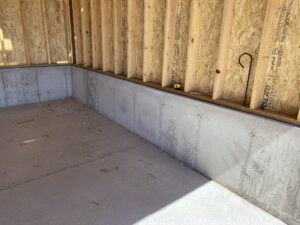
Expansive soil is one of the most common structural concerns in Colorado Springs.
These soils contain clay minerals that absorb moisture and swell. When conditions dry out, the same soils shrink. Over time, this cycle stresses foundations, slabs, retaining walls, patios, and other structural elements.
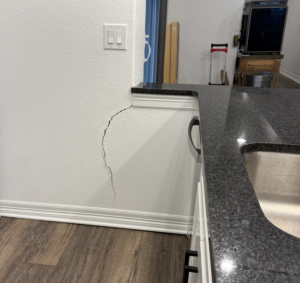
Many homeowners link foundation problems to large, visible cracks. However, smaller warning signs usually show up first: doors start to stick, drywall cracks appear, and floors become uneven. Soil movement often contributes to these issues.
That said, not every property in Colorado Springs sits on expansive soil. Some neighborhoods have sandy soils, weathered rock, or stable bedrock near the surface. Even neighboring lots can have very different subsurface conditions.
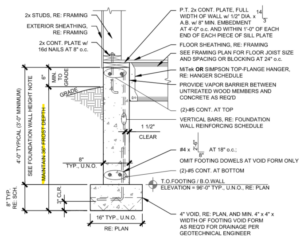
For this reason, site-specific soil testing is essential. A geotechnical engineer evaluates the soil first. A structural engineer in Colorado Springs then uses that report to design a foundation that suits the site.
Hillside Construction in Southern Colorado
As Colorado grows, builders are developing sites that would have seemed too difficult a few decades ago.
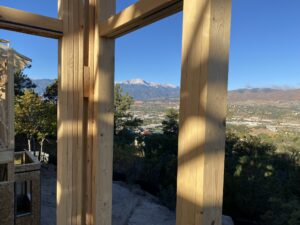
Many of the most desirable properties in Colorado Springs, Monument, Black Forest, and the foothills west of town sit on sloped terrain. These lots often offer incredible views. At the same time, they bring added engineering challenges, including:
- Retaining wall design
- Stepped foundations
- Drainage management
- Rock excavation
- Construction access
- Slope stability
Drainage deserves special attention. Poorly managed water can cause erosion, strain retaining walls, and create long-term maintenance problems. Careful planning during design reduces these risks before construction begins.
An engineer who works throughout Southern Colorado has likely solved these problems before. As a result, they can find practical solutions that fit the project budget.
Snow Loads and Elevation Changes
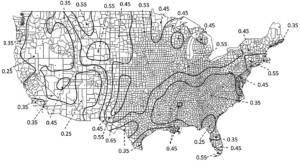
Many property owners are surprised by how much snow load requirements vary across Southern Colorado.
Snow loads often increase with elevation. For example, a building in Colorado Springs may have different design requirements than a similar building in Woodland Park or another mountain community.
Roof shape matters too. Valleys, roof transitions, and changes in roof height can cause snow to drift and pile up in specific areas. Engineers evaluate these conditions during design so the structure can safely carry expected loads throughout its service life.
The Value of a Local Structural Engineer in Colorado Springs
Every region develops its own construction practices based on climate, terrain, available materials, and contractor experience.
An out-of-state engineer can still produce a sound design. However, they may not know the construction methods that are common in Southern Colorado. They might also specify materials or products that are harder to find locally. Those solutions may work, but they can raise costs or complicate construction.
A local engineer, on the other hand, knows the regional building practices, permitting process, site conditions, and material availability firsthand. They can also visit the site, meet with contractors and owners, and help solve problems as they come up during construction. As a result, the process usually runs more smoothly for everyone.
Local expertise matters beyond foundations and framing, too. For instance, wildfire risk increasingly shapes how Colorado communities plan and build. Wildfire design is outside the scope of this article, but you can read more in EVstudio’s article on wildfire building codes in Colorado.
Start Your Project on Solid Ground
Successful projects begin with a clear understanding of the site. Expansive soils, hillside terrain, changing snow loads, and varied geology all shape how a structure should be designed.
EVstudio’s structural engineers work on projects throughout Colorado, including many in the Colorado Springs region. Our team provides structural engineering for custom homes, residential additions, retaining walls, multifamily developments, commercial buildings, and complex renovations. Every project is different, but early coordination helps reduce risk, control costs, and improve constructability.
Are you planning a custom home, evaluating an existing structure, or developing a commercial property? Talk with EVstudio’s structural engineer team in Colorado Springs about your site, and move your project forward with confidence.