
The Global Journey of Roof Drainage: From Ancient Innovation to Modern Engineering
One of the oldest challenges in architecture is surprisingly simple: how do you manage rainwater once it lands on a roof? No matter where people settled, they quickly realized that a roof was only effective if it could safely move water away from the structure. Over thousands of years, cultures around the world developed unique drainage methods based on available materials, climate conditions, and architectural styles. From natural thatched roofs and medieval gargoyles to Japanese rain chains and today’s sophisticated gutter systems, roof drainage has continually evolved to protect buildings and extend their lifespan.
Thatched Roofs: Drainage Built Into the Roof Itself
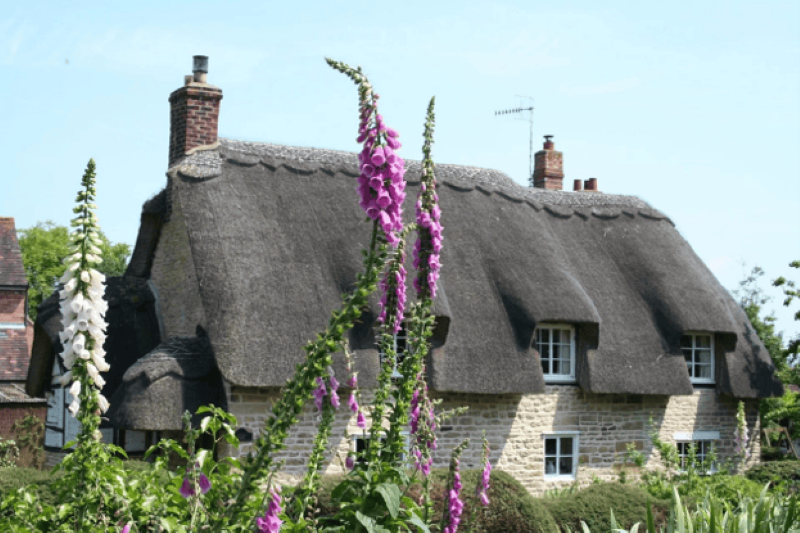
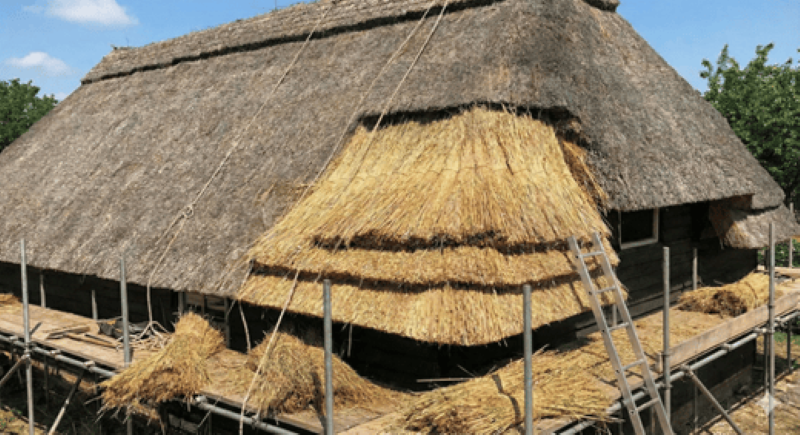
The earliest roof drainage systems were often built directly into the roof itself. Long before metal gutters existed, people relied on steeply pitched roofs made from natural materials such as straw, reeds, grasses, palm leaves, and heather. This technique, known as thatching, works by layering vegetation in a way that naturally sheds water away from the interior of the structure. Because water quickly runs down the tightly packed layers, thatched roofs could remain surprisingly durable while also providing insulation. Thatching became common across Europe, Asia, Africa, and the Americas, making it one of humanity’s oldest roofing technologies. Modern gutters collect runoff and direct it to specific locations. In contrast, thatched roofs simply allow water to run off the roof edge. Therefore, modern systems offer greater control and better protection for foundations and landscaping.
Pros of Thatching
- Highly effective at shedding water when properly installed
- Excellent natural insulation due to densely packed vegetation
- Sustainable and environmentally friendly when local materials are available
- Requires minimal manufactured components
Cons of Thatching
-
- Requires regular maintenance and periodic replacement
- Can be vulnerable to fire if untreated
- Less suitable for dense urban environments
- Performance depends heavily on craftsmanship and material quality
From Roman Waterspouts to Gothic Gargoyles
As civilizations began constructing larger and more permanent buildings from stone, new drainage challenges emerged. Water running directly down masonry walls could erode mortar and damage the structure over time. To solve this problem, builders in ancient Greece and Rome developed waterspouts that projected rainwater away from walls. These early drainage elements eventually influenced one of the most recognizable features of medieval architecture: the gargoyle.
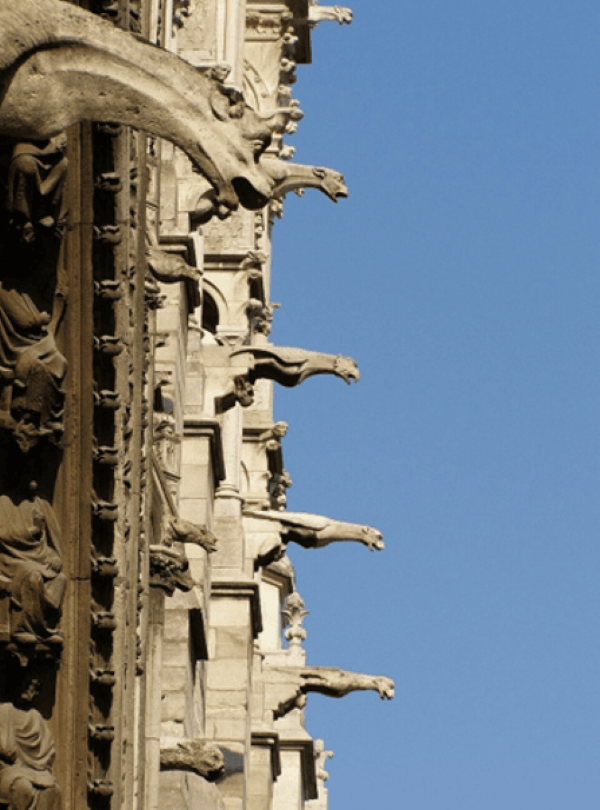
During the Gothic period in Europe, gargoyles became both functional engineering devices and artistic expressions. A true gargoyle is a carved figure that contains a spout designed to channel water from the roof and throw it away from the building’s walls. Architects often installed multiple gargoyles to distribute heavy rainfall and reduce erosion. Their elongated shapes were not merely decorative; the extended form helped project water farther from the structure. While many people associate gargoyles with religious symbolism and fantastical creatures, their primary purpose was rainwater management. Modern scuppers perform a similar function. Both move water through an opening and away from the building. However, scuppers are simpler, easier to install, and less expensive. Gargoyles remain unmatched for artistic value, but scuppers deliver greater efficiency.
Pros of Gargoyles
- Protect stone walls from erosion and water staining, reducing long-term damage
- Add artistic and symbolic value to buildings
- Require no mechanical components
Cons of Gargoyles
- Expensive and labor-intensive to carve and install
- Most practical for large masonry buildings
- Can deteriorate over time due to weather exposure
- Water discharge locations are less controllable than modern systems

Japanese Rain Chains: Kusari-toi
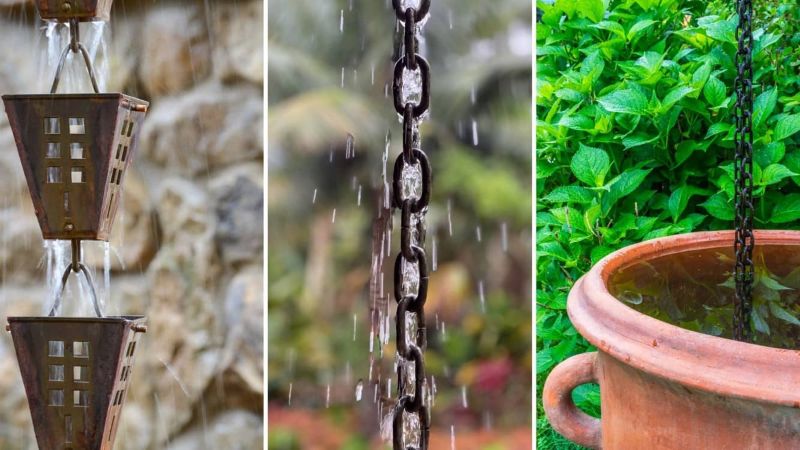
Meanwhile, in Japan, a very different philosophy emerged. Rather than disguising drainage systems as fearsome creatures, Japanese builders transformed runoff into a visual and auditory experience. Rain chains, known as “kusari-toi” or “chain gutters,” were developed as an alternative to traditional downspouts. These chains guide water from gutters to the ground using linked cups or metal chains, creating a gentle cascade of flowing water. Often found on temples and traditional buildings, rain chains blend utility with aesthetics, turning rainfall into a calming water feature while still directing runoff safely away from structures. Rather than hiding water, rain chains celebrate it. Modern downspouts prioritize performance while rain chains prioritize aesthetics. Although downspouts move water more efficiently, many homeowners choose rain chains to combine function with visual appeal.
Pros of Rain Chains
- Attractive architectural feature
- Creates a calming water display and sound
- Can direct water to collection basins for reuse
- Easier to inspect than enclosed downspouts
Cons of Rain Chains
-
- Less effective during heavy winds or severe storms
- Water may splash outside the intended drainage area
- Can freeze in colder climates
What Modern Systems Still Borrow From the Past
Modern roof drainage systems typically rely on gutters, downspouts, and engineered drainage networks because they offer superior efficiency and control. Nevertheless, historical drainage methods continue to inspire modern design. They remind us that builders have solved the same challenge for centuries. Thatched roofs remain popular in some regions for their sustainability and traditional appearance, gargoyles are preserved on historic buildings as reminders of medieval ingenuity, and rain chains have become fashionable worldwide as decorative alternatives to conventional downspouts. Roof drainage continues to reflect both human ingenuity and the cultural values of the societies that created it. While technology has advanced dramatically, the goal remains unchanged: move water away from the building safely and efficiently.
Every project we design still answers that same question. If you’re working through drainage, roof design, or site grading on a building of your own, our Architecture and Civil Engineering teams would be glad to talk it through with you.
Resources
- https://www.newenglandmetalroof.com/what-is-a-thatched-roof/
- https://its-thatchers.com/content/united-kingdom/
- https://en.wikipedia.org/wiki/Thatching
- https://www.la.utexas.edu/users/bump/oxford/gargoyles.html
- https://www.medieval-life-and-times.info/medieval-art/gargoyles.htm
- https://en.wikipedia.org/wiki/Gargoyle
- https://www.japan-experience.com/plan-your-trip/to-know/understanding-japan/rain-chains
- https://www.thisoldhouse.com/gutters/what-is-a-rain-chain
- https://en.wikipedia.org/wiki/Rain_chain


