

Housing Colorado 2026: Ideas, Innovation and a Look at What’s Next
Affordable housing is complicated. It takes developers, designers, jurisdictions, funding partners, contractors, and communities working together to move a project forward.
This year, I attended the conference alongside my EVstudio colleagues Roxanne Jacobson and Mike Nickel. We spent several days learning, connecting, and listening to different perspectives from across Colorado’s affordable housing community. EVstudio Principal, and co-founder Dean Dalvit also joined the conference and spoke as a panelist.
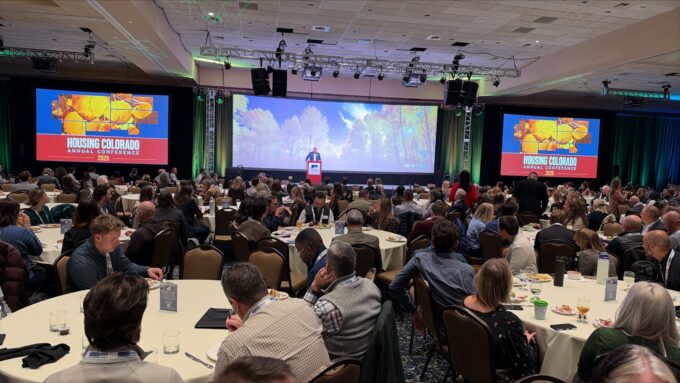
Held October 14–16 at the Keystone Conference Center, the sold-out conference brought together professionals from across affordable housing development, finance, construction, operations, policy, and advocacy. Housing Colorado estimates its annual conference audience at approximately 1,000 housing professionals and partners.
For me, one of the biggest takeaways was simple: there is no single solution to Colorado’s housing challenges. Instead, progress comes from understanding how dozens of decisions interact. Funding, entitlement processes, design, construction methods, energy requirements, community needs, and schedules all play a role.
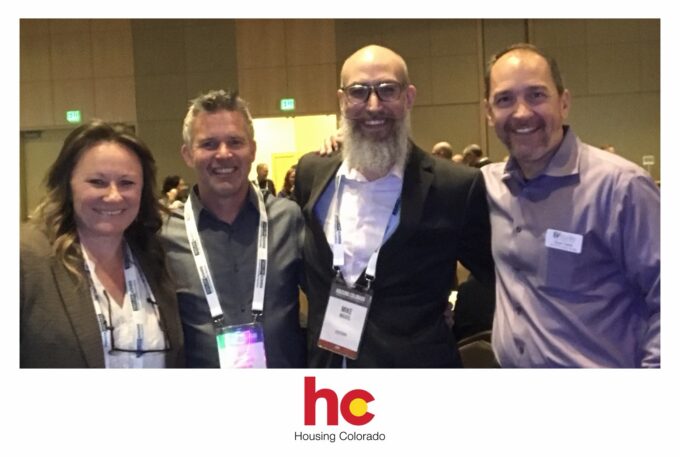
Housing Colorado 2026 Brought the Industry Together
The conference was extremely well attended, which created plenty of opportunities for meaningful conversations. We connected with developers, local jurisdictions, state representatives, and other industry professionals. Those conversations were just as valuable as the formal sessions.
A major topic throughout the conference was funding for affordable housing. We also heard a lot about the outlook for future projects and the processes required to get those developments built. Another recurring question was how Colorado can improve processes and timing at the state and local levels.
Affordable housing projects already involve many moving pieces. When reviews, funding applications, approvals, and design decisions do not align, even small delays can have major consequences.
Making Affordable Housing Funding Easier to Navigate
One of Rox’s biggest highlights was learning more about Housing Hub Colorado as an excellent resource.
Housing Hub Colorado is an initiative involving the State of Colorado, CHFA, the City and County of Denver, and other agencies. Its goal is to create a more streamlined process for affordable rental housing tax credits and related public funding.
The initiative includes aligned application questions, a streamlined DOLA pre-application, and a unified funding timeline. A common application for funding sources related to developments supported by Housing Tax Credits is also targeted as part of the initiative. For anyone who has worked through affordable housing funding applications, the potential impact is easy to understand.
Developers often pursue several funding sources at once. Each comes with its own requirements, deadlines, documents, and processes. Housing Hub Colorado aims to organize more of that information and reduce unnecessary administrative work.
Ultimately, anything that allows development teams to spend less time duplicating paperwork — and more time solving project challenges — is a positive step.
Learning to See a Project From Every Side
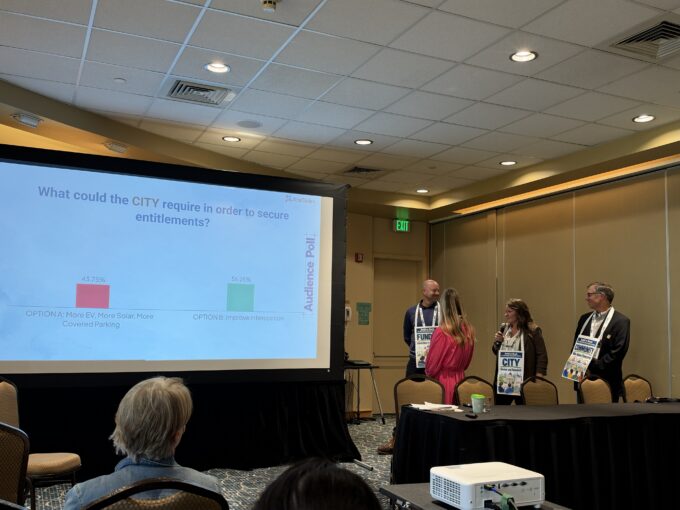
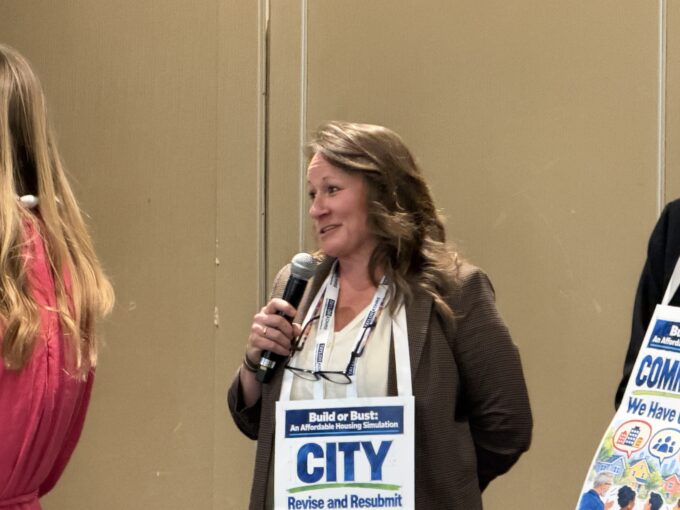
Roxanne also participated as a contestant in an interactive “Build or Bust” session. The exercise created an affordable housing scenario and brought together perspectives from the community, local government, funding sources, and development team.
What made the session so effective was seeing how one decision affected everyone else. A change that seems minor from one perspective can dramatically affect funding, community acceptance, design, or project feasibility. In some cases, enough small changes can make a project no longer financially feasible to build. The session challenged participants to put themselves in each other’s shoes.
That lesson applies well beyond affordable housing. The earlier project partners understand each other’s priorities and constraints, the better chance a project has of succeeding.
Affordable Housing Is About More Than New Construction
Another valuable discussion focused on the existing building stock. Affordable housing conversations often center on building new units. However, adaptive reuse and preservation of existing structures can also play an important role.
That discussion stood out to me because it reinforces the need to approach each opportunity individually. An existing structure may offer advantages in location, infrastructure, or embodied investment. At the same time, reuse can introduce challenges involving building systems, accessibility, code compliance, energy performance, and layout.
As architects and engineers, our role is to help teams understand those tradeoffs early. The right answer may be new construction. In another situation, it may mean finding a creative new life for an existing building.
Connecting Housing With Early Childhood Education
Another interesting topic was the relationship between affordable housing and early childhood education, particularly in rural communities. Housing does not exist in isolation. A community may desperately need affordable multifamily housing while also facing a significant shortage of early childhood education options. Those needs affect one another.
Conference discussions explored how developers are thinking about early childhood education alongside multifamily projects and how those uses may fit within complex affordable housing financing structures, including the Low-Income Housing Tax Credit (LIHTC) process.
For our team, it was a good reminder to think beyond the building. Successful housing supports a community. That means considering the services, infrastructure, transportation, education, and other resources residents need to thrive.
Electrification: From Big Idea to Real Building
Mike Nickel attended several sessions throughout Housing Colorado 2026, but one of his favorites focused on building electrification.
What made the session particularly useful was its balance. It covered both the technical side of electrification and the procedural steps required to actually implement it. Those two perspectives need to work together.Design teams must understand building systems, electrical demand, equipment selection, and overall performance. Meanwhile, owners and developers need to understand costs, utility coordination, schedules, incentives, and long-term operations.
For a multidisciplinary architecture and engineering firm like EVstudio, those conversations are especially relevant. Integrated design allows architectural, mechanical, electrical, structural, civil, and other considerations to come together earlier.
AI Is Finding Its Place in Affordable Housing
Artificial intelligence was another recurring topic. Rather than simply discussing AI as a future technology, presenters shared examples of how people are beginning to implement it in their current processes. That conversation is going to keep evolving.
For our industry, the important question is not simply, “How can we use AI?” It is, “Where can technology remove repetitive work while allowing people to spend more time solving meaningful problems?”
Used thoughtfully, these tools may help teams organize information, evaluate options, communicate more effectively, and move through certain processes faster.
Dean Dalvit Joins the Innovation Conversation
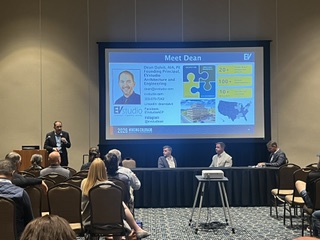
A major EVstudio highlight came Wednesday afternoon when our co-founder, Dean Dalvit, participated in the “Innovations in Affordable Housing Construction” panel.
Dean joined Rodger Hara of Community Builders Realty Services, Jack Tiebout of Azure Printed Homes, Nate Peterson of Vederra Modular, and Michael Koehler of BYLD.
The panel was very informative and generated an engaging Q&A with attendees. There was significant discussion around alternative and modular construction, as well as the broader meaning of innovation within affordable housing.
Dean and Nate had an opportunity to dig deeper into alternative modular approaches, and the newly innovative Alt-Mod™. Nate also shared insight into how Vederra approached the setup of its factory.
Rather than following a traditional manufacturing model, the company looked for new ways to structure its process around its product and housing goals. That discussion highlighted an important point: innovation does not always mean inventing something completely new.
Sometimes innovation means changing the process.It can mean reconsidering how a building gets manufactured, how teams collaborate, how materials are selected, or when decisions are made. For affordable housing, those improvements can be particularly valuable when teams are trying to balance quality, schedule, cost, and repeatability.
The Biggest Takeaway From Housing Colorado 2026
I left Housing Colorado 2026 encouraged by the amount of collaboration happening across the industry.
Housing Colorado describes its mission as bringing together housing professionals, advocates, and leaders to help advance solutions that make housing more affordable across the state. That collaborative approach was evident throughout this year’s conference. Developers cannot solve the housing challenge alone. Neither can architects, engineers, municipalities, contractors, funding agencies, or policymakers. We need all of those perspectives at the table.
More importantly, we need to understand how the decisions made by one group affect everyone else. Whether the conversation involves streamlined funding applications, adaptive reuse, electrification, early childhood education, AI, modular construction, or another emerging solution, the goal remains the same: find better ways to deliver housing that communities need.
Our EVstudio team came home with new ideas, new connections, and plenty of conversations we plan to continue.
Let’s Keep the Affordable Housing Conversation Going
Thank you to Housing Colorado, the presenters, panelists, and everyone who connected with our team during this year’s conference.
EVstudio provides integrated architecture and engineering services for affordable and multifamily housing projects throughout Colorado and beyond. We enjoy getting involved early, working through complicated project constraints, and helping development teams turn ideas into buildable solutions.
Planning an affordable housing project or exploring new approaches to design and construction? Connect with EVstudio to start a conversation with our team.