
Indoor Air Quality: Why Clean Indoor Air Matters More Than Ever
People spend a significant amount of their time indoors. Therefore, indoor air quality (IAQ) plays a major role in health, comfort and productivity. Poor indoor air can contain dust, allergens, mold spores, bacteria, viruses, volatile organic compounds (VOCs), and other contaminants. As a result, maintaining healthy indoor air should be a priority for every home and business. cdc.gov
What Is Indoor Air Quality?
Indoor air quality refers to the condition of the air inside buildings and occupied spaces. It focuses on pollutant levels, ventilation effectiveness, humidity control, and occupant health. Good IAQ helps create a safer and more comfortable environment. In contrast, poor IAQ can negatively affect both short-term and long-term health.
Several factors influence indoor air quality, including:
- Ventilation rates
- Air filtration efficiency
- Humidity levels
- Outdoor air conditions
- Occupant activities
- HVAC system maintenance
Because these factors constantly change, indoor air quality requires ongoing attention.
The Health Effects of Poor Indoor Air Quality
Poor indoor air quality can affect people in different ways. Some symptoms appear quickly, while others develop over time.
Short-term effects may include:
- Headaches
- Fatigue
- Eye irritation
- Nasal congestion
- Coughing
- Dizziness
Long-term exposure can contribute to more serious health concerns. These concerns include asthma aggravation, respiratory illnesses, allergic reactions, and increased susceptibility to airborne diseases. Infectious aerosols can remain suspended in indoor air for extended periods, increasing exposure risks in poorly ventilated spaces.
Consequently, organizations now place greater emphasis on ventilation, air cleaning, and filtration strategies.
Understanding ASHRAE Standard 241
ASHRAE Standard 241, Control of Infectious Aerosols, establishes minimum requirements for reducing the risk of airborne disease transmission inside buildings. The standard applies to new buildings, existing facilities, and major renovations. [ashrae.org]
The standard addresses:
- Air system design
- Operation and maintenance
- Filtration requirements
- Air cleaning technologies
- Infection Risk Management Modes (IRMM)
- Equivalent Clean Airflow Rates (ECAi)
Furthermore, ASHRAE 241 encourages building owners to improve resilience during periods of elevated disease transmission. This approach helps reduce exposure to pathogens such as influenza and other airborne viruses.
Addressing Indoor Air Quality During Building Design
The best time to improve indoor air quality is during the building design phase. Early planning allows architects, engineers, and building owners to create healthier indoor environments from the start. As a result, occupants benefit from cleaner air, improved comfort, and reduced exposure to contaminants.
Ventilation System Design
Proper ventilation forms the foundation of good indoor air quality. Designers should provide adequate outdoor air to dilute indoor pollutants and maintain healthy indoor conditions. Modern HVAC systems can deliver controlled ventilation while maintaining energy efficiency.
Key design considerations include:
- Proper outdoor air intake locations
- Balanced air distribution throughout occupied spaces
- Dedicated outdoor air systems (DOAS)
- HVAC systems capable of supporting enhanced filtration and air cleaning technologies
Filtration and Air Cleaning Strategies
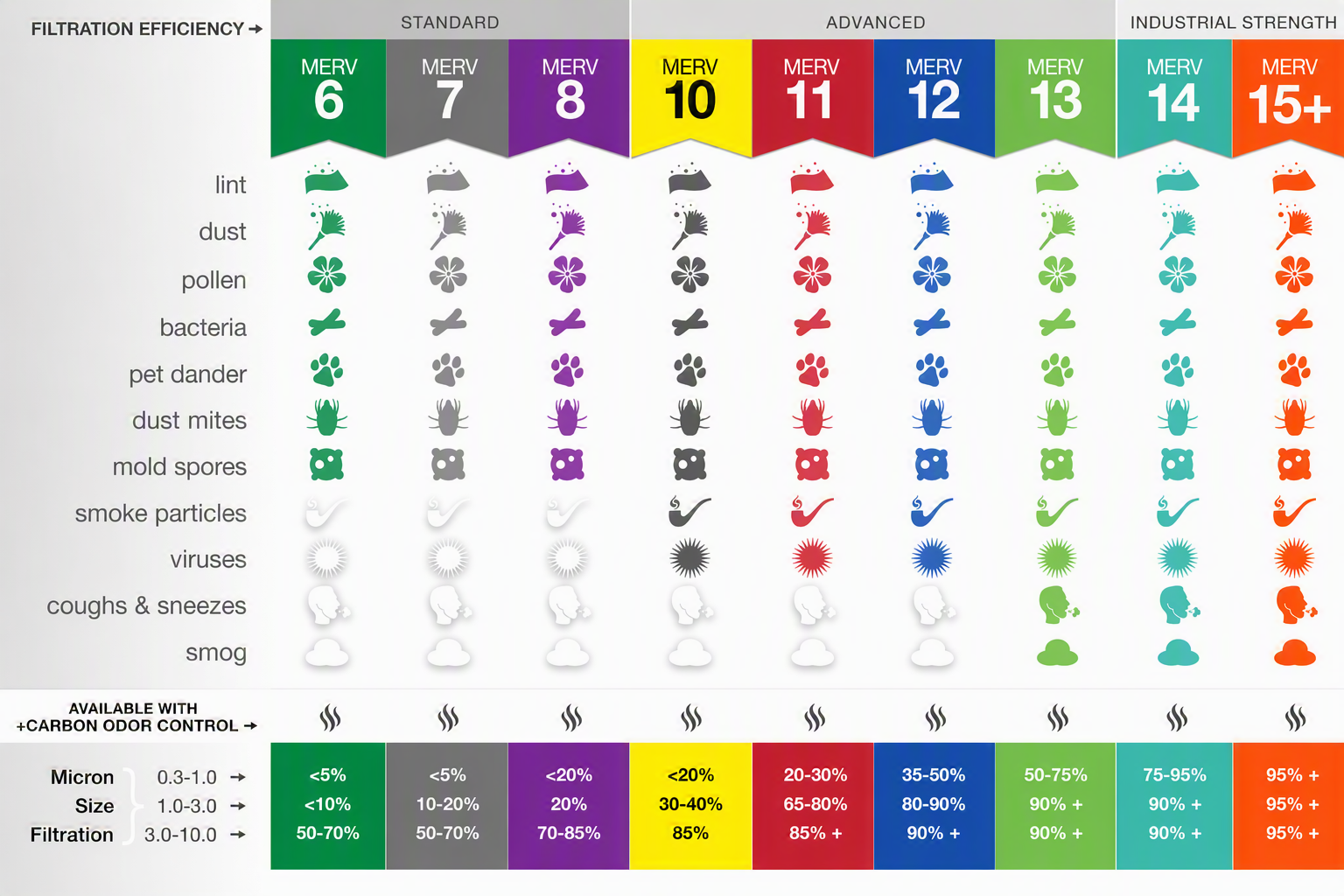
Designers should select HVAC equipment that can accommodate higher-efficiency air filters. Systems designed for MERV 13 or higher filtration can capture a greater percentage of fine particles, including many allergens, smoke particles, and airborne contaminants. The EPA and CDC recommend MERV 13 filtration whenever system design allows. [epa.gov]
In addition, designers may incorporate:
- HEPA filtration in specialized applications
- Ultraviolet Germicidal Irradiation (UVGI) systems
- Portable or integrated air purification technologies
- Supplemental filtration for high-occupancy spaces
Humidity Control
Humidity management plays a critical role in maintaining healthy indoor air. Excess moisture encourages mold growth and increases dust mite populations. Conversely, very dry air can irritate the eyes, nose, and throat.
Therefore, HVAC systems should maintain balanced humidity levels throughout the year. Proper drainage, insulation, and building envelope design also help prevent moisture-related issues.
Building Readiness and Long-Term Performance
Indoor air quality should remain a priority throughout the building’s lifecycle. ASHRAE Standard 241 encourages planning, commissioning, and ongoing maintenance to ensure HVAC systems continue performing as intended. Building readiness plans help operators respond effectively during periods of elevated airborne disease transmission risk.
By addressing ventilation, filtration, source control, humidity management, and ongoing system performance during design, building owners can create healthier, safer, and more resilient indoor environments for years to come.
Conclusion
Indoor air quality has a direct impact on how people feel, work, and stay healthy inside buildings. As awareness grows around airborne contaminants, ventilation, filtration, humidity control, and ongoing HVAC maintenance have become more important than ever. Standards like ASHRAE 241 provide a helpful framework for reducing airborne disease transmission and improving building readiness. By planning for IAQ early in design and maintaining systems over time, building owners can create healthier, safer, and more resilient indoor environments for occupants.
Additional Resources
- ASHRAE Standard 241: https://www.ashrae.org/technical-resources/bookstore/ashrae-standard-241-control-of-infectious-aerosols [ashrae.org]
- EPA MERV Ratings Guide: https://www.epa.gov/indoor-air-quality-iaq/what-merv-rating [epa.gov]
- CDC Ventilation Guidance: https://www.cdc.gov/niosh/ventilation/about/index.html
- Indoor Air Quality Resources (EPA): https://www.epa.gov/indoor-air-quality-iaq [epa.gov]


