Insights from Advancing Data Centers Construction 2026
Data centers are transforming the built environment. However, their scale and infrastructure demands create unique challenges during the entitlement process. These issues were the focus of a panel discussion at the Advancing Data Centers Construction 2026 conference held in Phoenix from March 10–12.
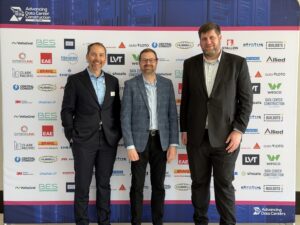
The session explored how designers, planners, and developers can work together to streamline approvals for these complex projects. The discussion was moderated by Ryan Colker of the International Code Council. Additionally, Seth Gunnerson from the Cedar Rapids Iowa Planning Department joined the panel to share insights from the municipal perspective, and of course, our own Dean Dalvit from EVstudio to speak on the entitlements process.
Together, the speakers highlighted practical strategies for navigating regulatory processes while addressing community concerns.
The Growing Complexity of Data Center Development
Data centers are not typical buildings. Instead, they function as large-scale infrastructure hubs. They demand significant power capacity, advanced cooling systems, and robust redundancy.
Consequently, these facilities often raise questions during local approval processes. Communities want to understand potential impacts on utilities, water consumption, and neighborhood compatibility.
However, early coordination can reduce these concerns. When project teams engage planners and utilities early, misunderstandings become less likely. As a result, projects often move more smoothly through the entitlement process.
Early Collaboration Improves Outcomes
Panelists emphasized the importance of early communication. Specifically, developers should meet with local officials before submitting formal applications.
This approach allows planners and engineers to identify potential obstacles early. For example, utility capacity, emergency access, and generator placement can be discussed during concept design.
Furthermore, early collaboration builds trust between project teams and municipalities. This relationship helps communities feel confident about the project’s long-term impact.
In addition, planners gain a clearer understanding of how the facility will operate.
Planning Data Centers as Long-Term Campuses
Another key takeaway involved campus planning. Data centers rarely develop as single buildings. Instead, they often grow in phases over many years.
Therefore, evaluating projects as long-term campuses can improve the approval process. This approach allows jurisdictions to review infrastructure, access roads, and utility needs at a broader scale.
Moreover, campus planning reduces uncertainty for both developers and communities. Future expansions can occur without reopening fundamental land-use questions.
Consequently, phased development becomes easier to manage.
Emerging Trends in Self-Powered Facilities
The panel also discussed innovations in power and cooling technologies. These developments are reshaping how data centers interact with local infrastructure.
Increasingly, developers are adopting “bring your own power” strategies. For instance, some facilities include on-site microgrids or fuel-cell systems.
Additionally, renewable energy systems and battery storage are becoming more common. These technologies allow facilities to reduce reliance on regional power grids.
Water efficiency is also improving. New cooling methods require significantly less water than traditional systems. Examples include closed-loop cooling and direct liquid cooling technologies.
As a result, modern facilities can operate with lower environmental impact.
Strengthening Partnerships with Communities
Finally, the panel highlighted the importance of community partnerships. Successful projects often include infrastructure improvements that benefit the surrounding area.
For example, developers may fund roadway upgrades or fiber infrastructure expansions. These improvements provide lasting value for local residents and businesses.
Furthermore, transparent communication can reduce community concerns. Informational meetings allow residents to learn how the facility operates.
This approach helps clarify misconceptions about noise, traffic, or environmental impacts.
Key Takeaways for Future Projects
The discussion concluded with several important recommendations. First, engage local officials early in the planning process. Second, evaluate projects as long-term campuses rather than single buildings. Third, consider innovative energy and cooling technologies to reduce infrastructure demand. Finally, focus on partnerships that create community benefits.
Together, these strategies can help jurisdictions and developers navigate the evolving world of data center development.
As demand for digital infrastructure continues to grow, collaboration will remain essential. Events like the Advancing Data Centers Construction 2026 demonstrate how shared knowledge can lead to better outcomes for both communities and the technology industry.
Written By: Dean Davit