From the Crag to the Classroom: Designing for Movement and Learning

Built to Climb: Creating Another Tool for Learning
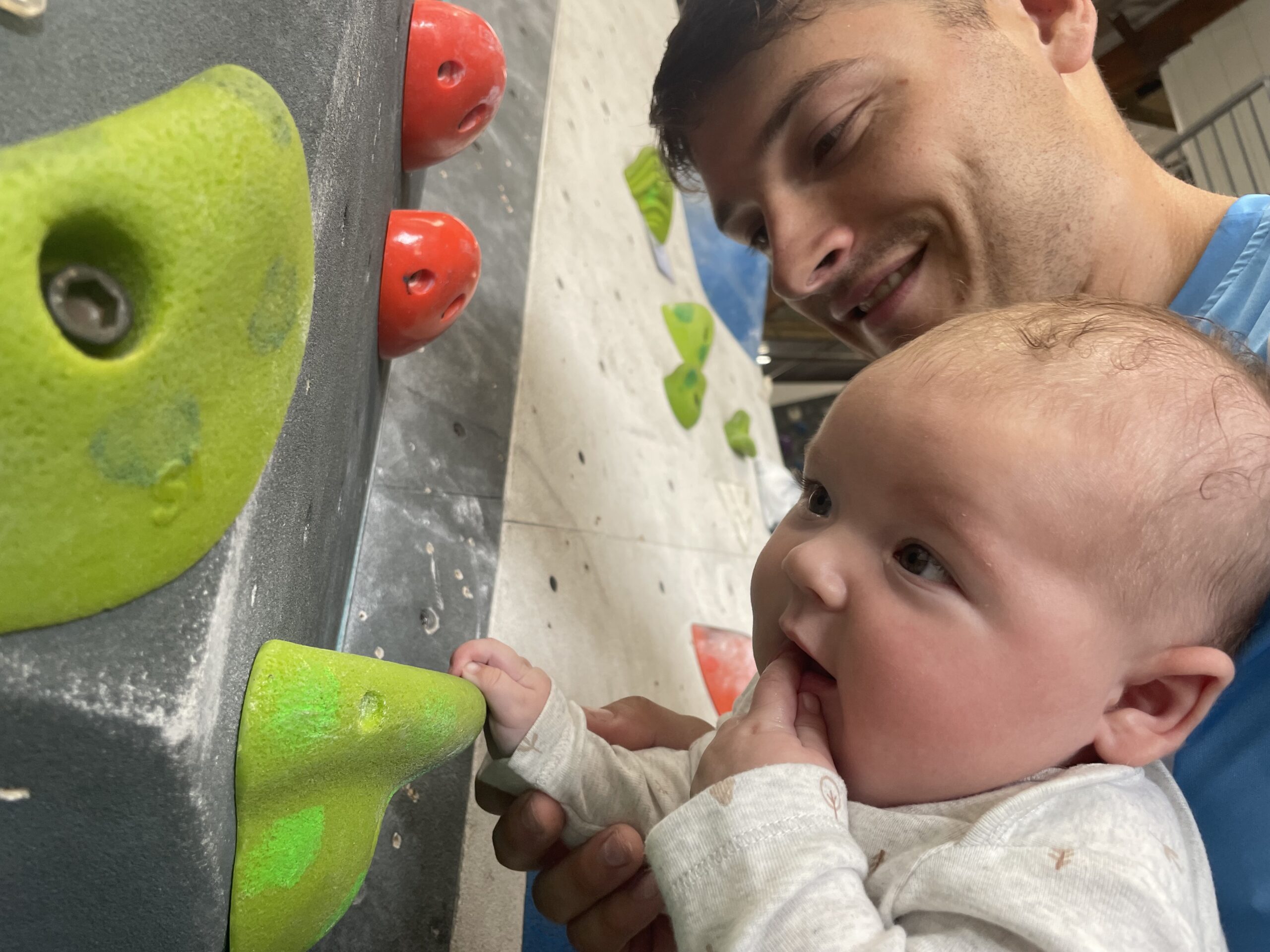
I’ve always loved climbing. There’s something about being outside, connected to the mountains, and figuring out how to get yourself from one point to the next that is hard to replicate anywhere else.
Now I have a toddler, and I’m watching the very beginning of that same instinct play out in real time.
She climbs everything.
Furniture, stairs, playground equipment, rocks—if she can get a foot on it, she’s going to try to get on top of it. Watching her has made me think differently about climbing, not just as recreation, but as another way kids explore, problem-solve, and learn about the world around them.
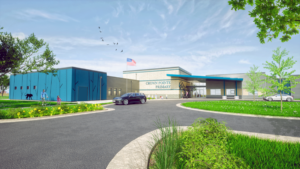
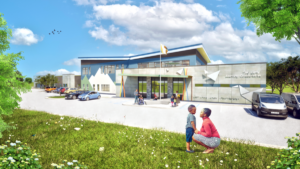
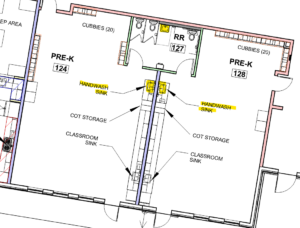
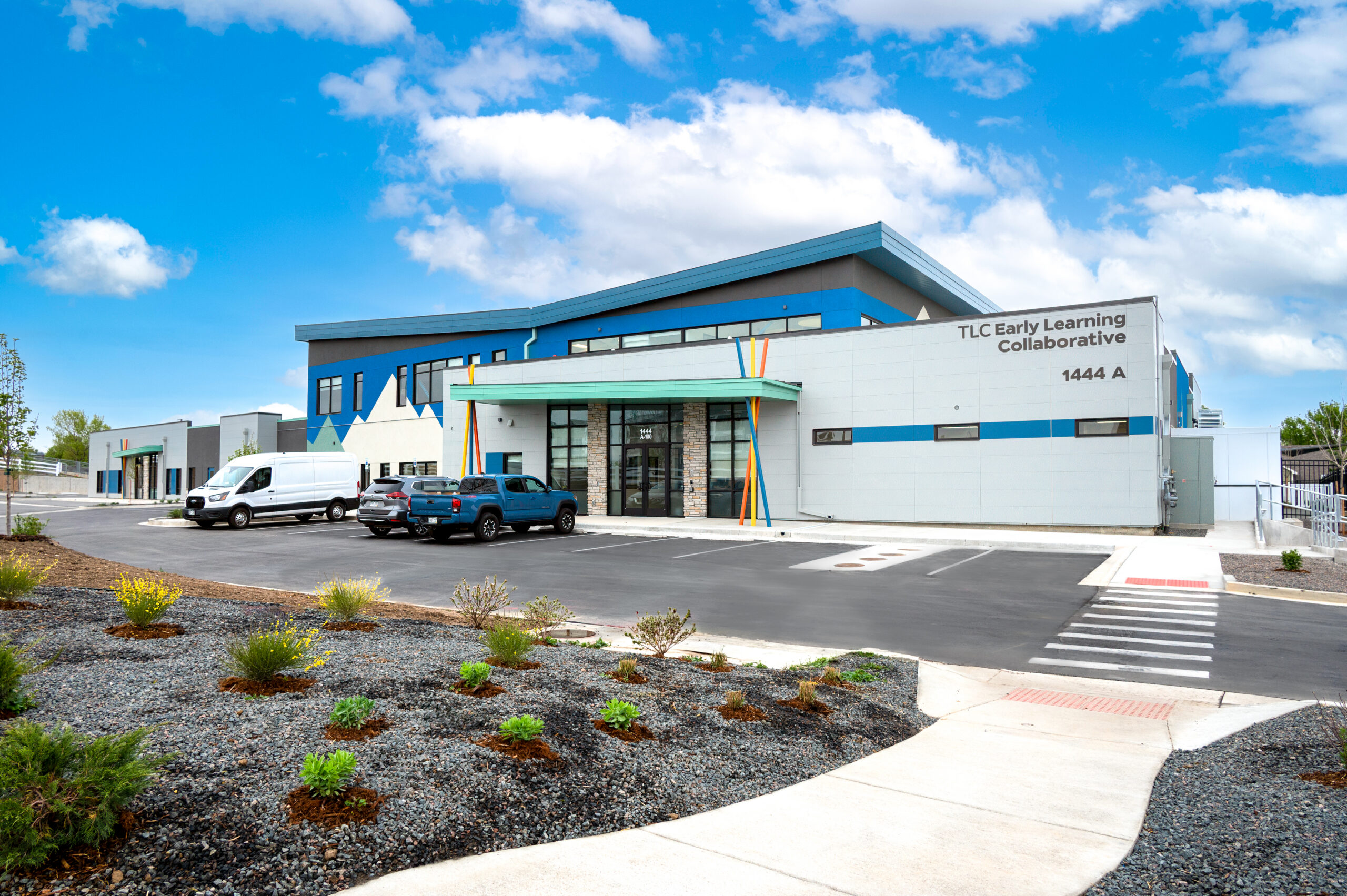
That idea came together in a really interesting way on a recent project, TLC Early Learning Center, an early childhood education and pediatric therapy facility where movement is an important part of the program. Teachers and therapists are constantly finding different ways to engage kids—sometimes sitting at a table, sometimes on the floor, sometimes moving around the room. The spaces we design can either limit those options or give them more to work with.
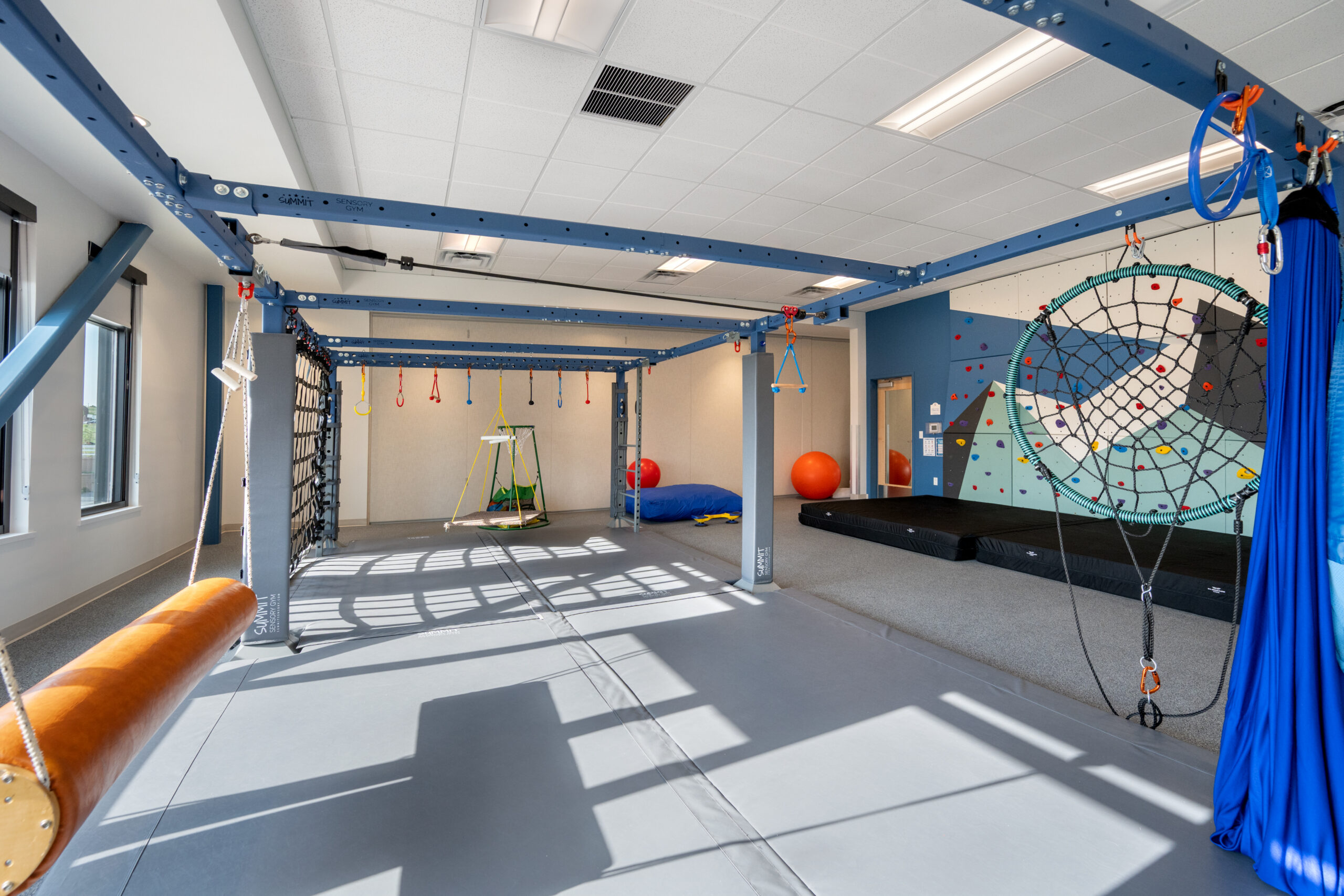
The movement room gave us an opportunity to create something a little different: a climbing wall that could become another teaching tool.
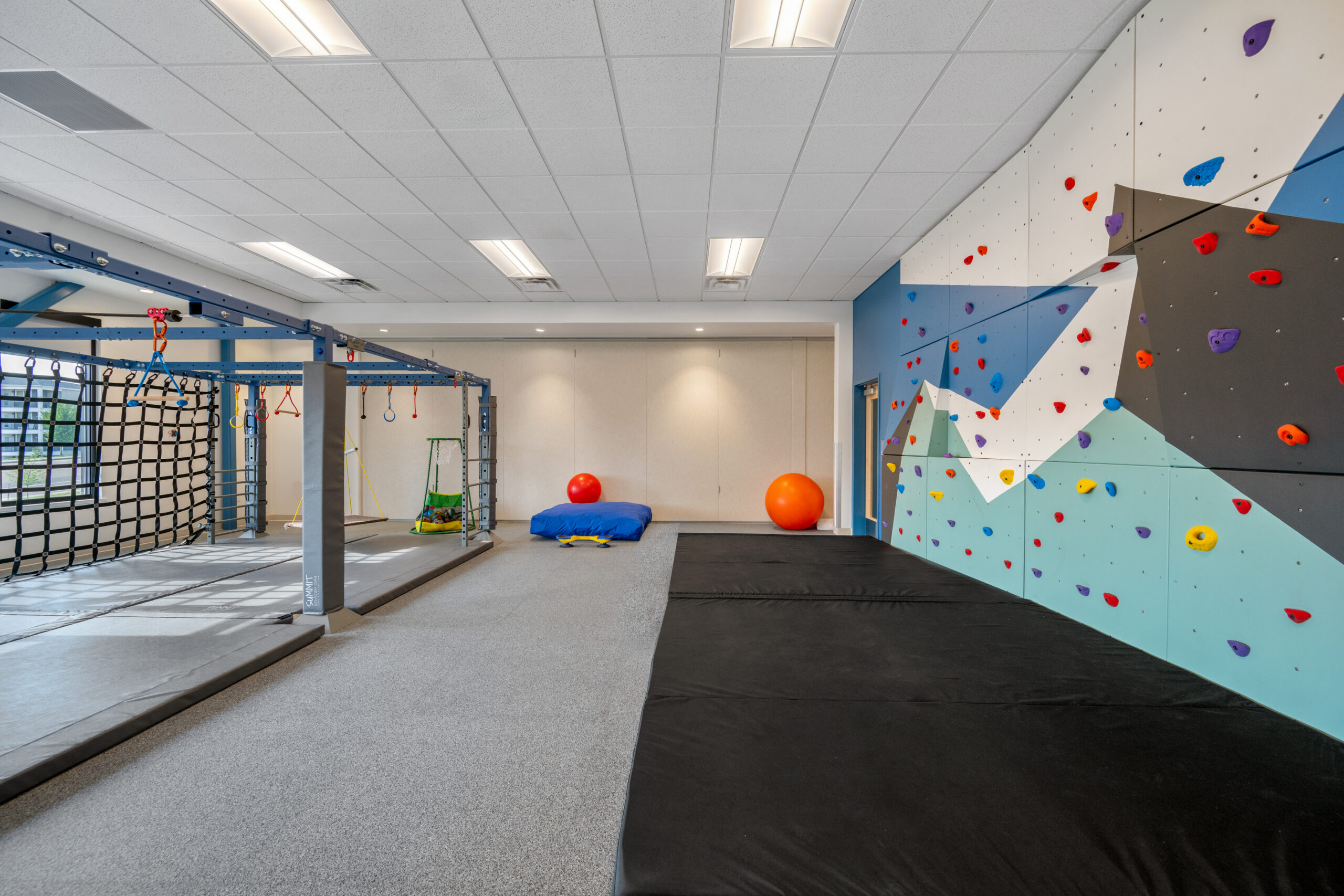
Rather than providing a flat surface, we developed a mix of flat, sloped, and projecting panels, with one side intentionally more approachable and the wall becoming progressively more challenging. Kids can climb up, but they can also move laterally, follow a route, cross from one side to another, work around an obstacle, or find their own way through. The holds can be rearranged within the panel layout, too, so the wall doesn’t have to provide the same experience every time.
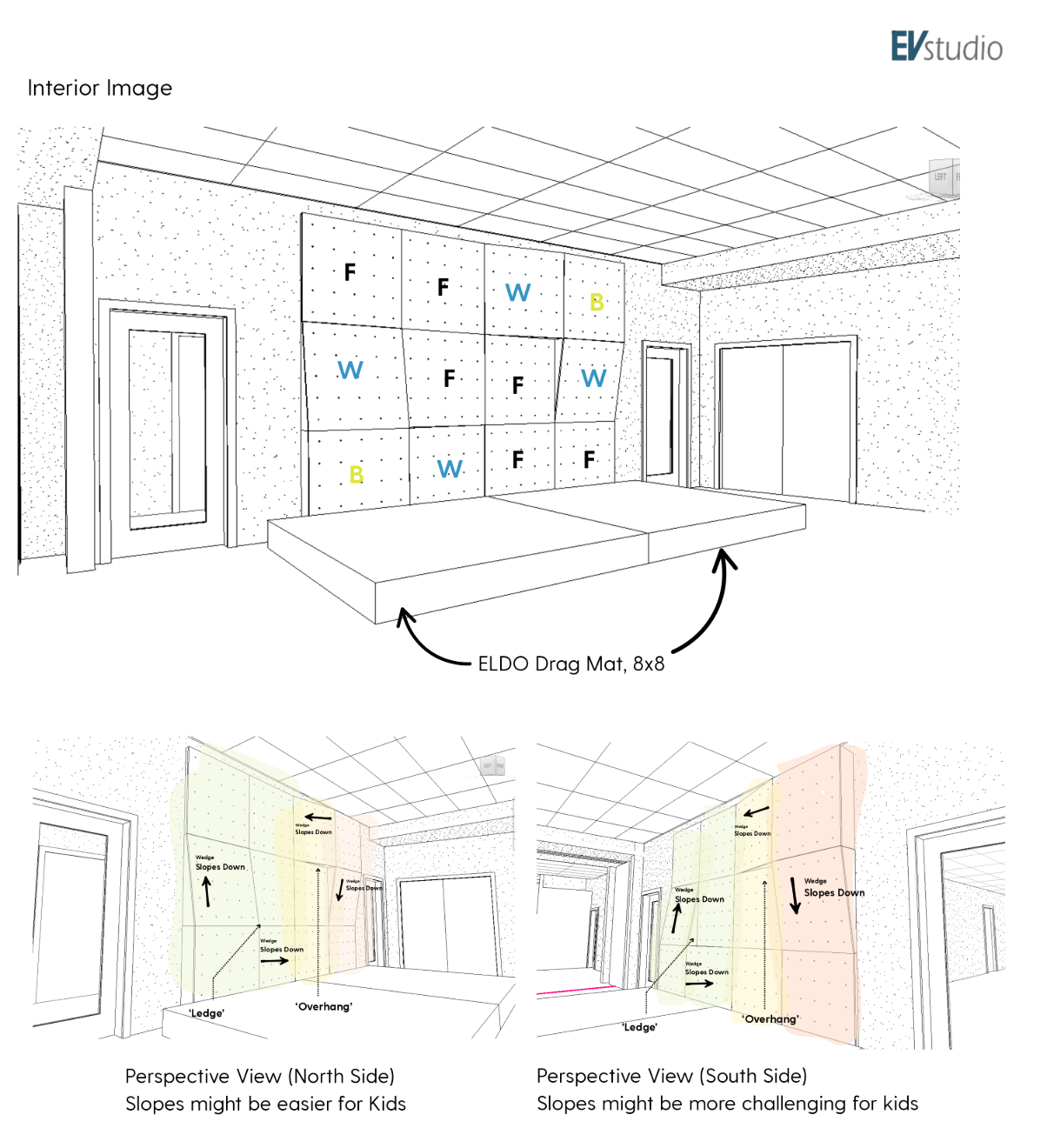
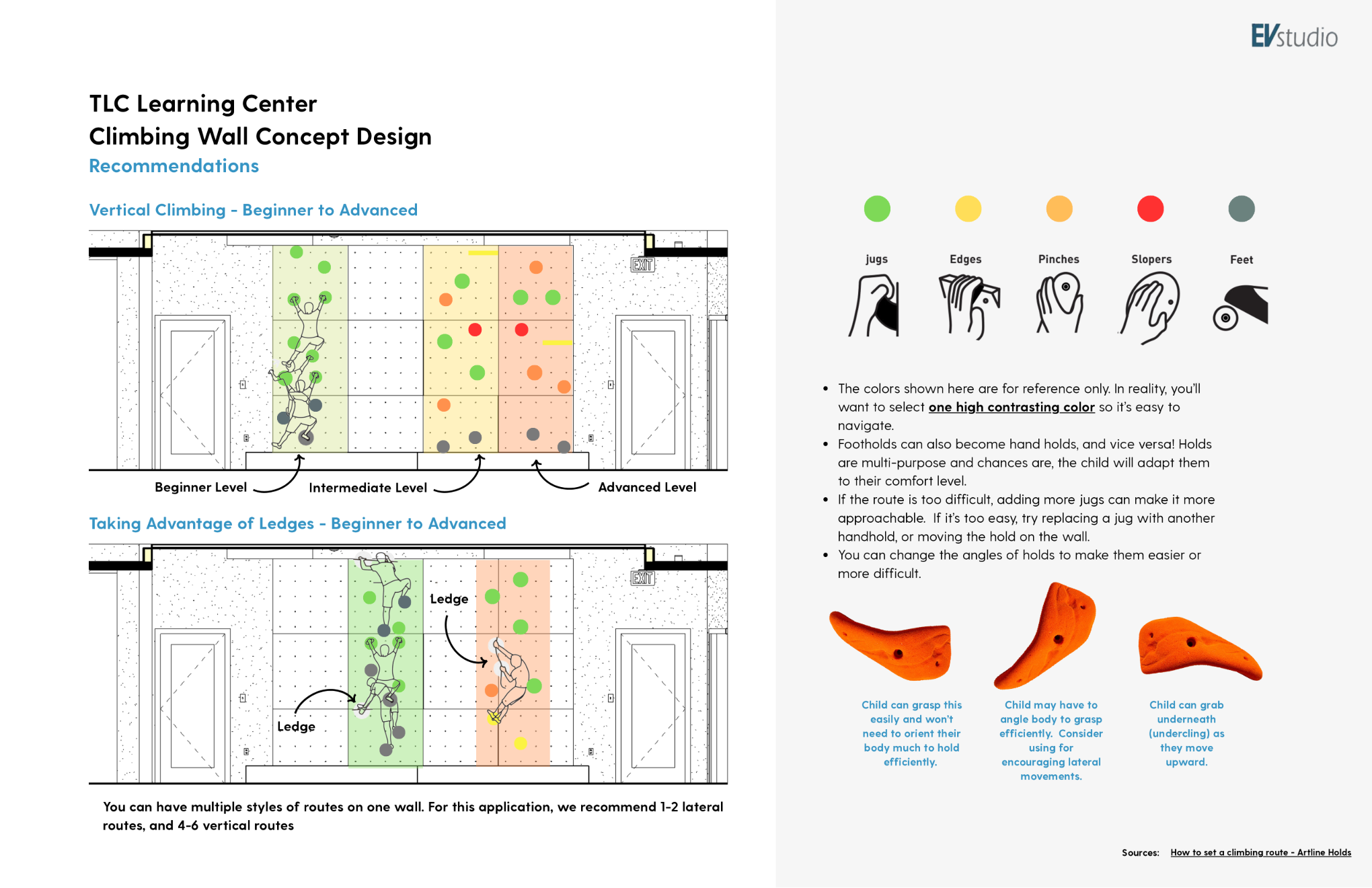
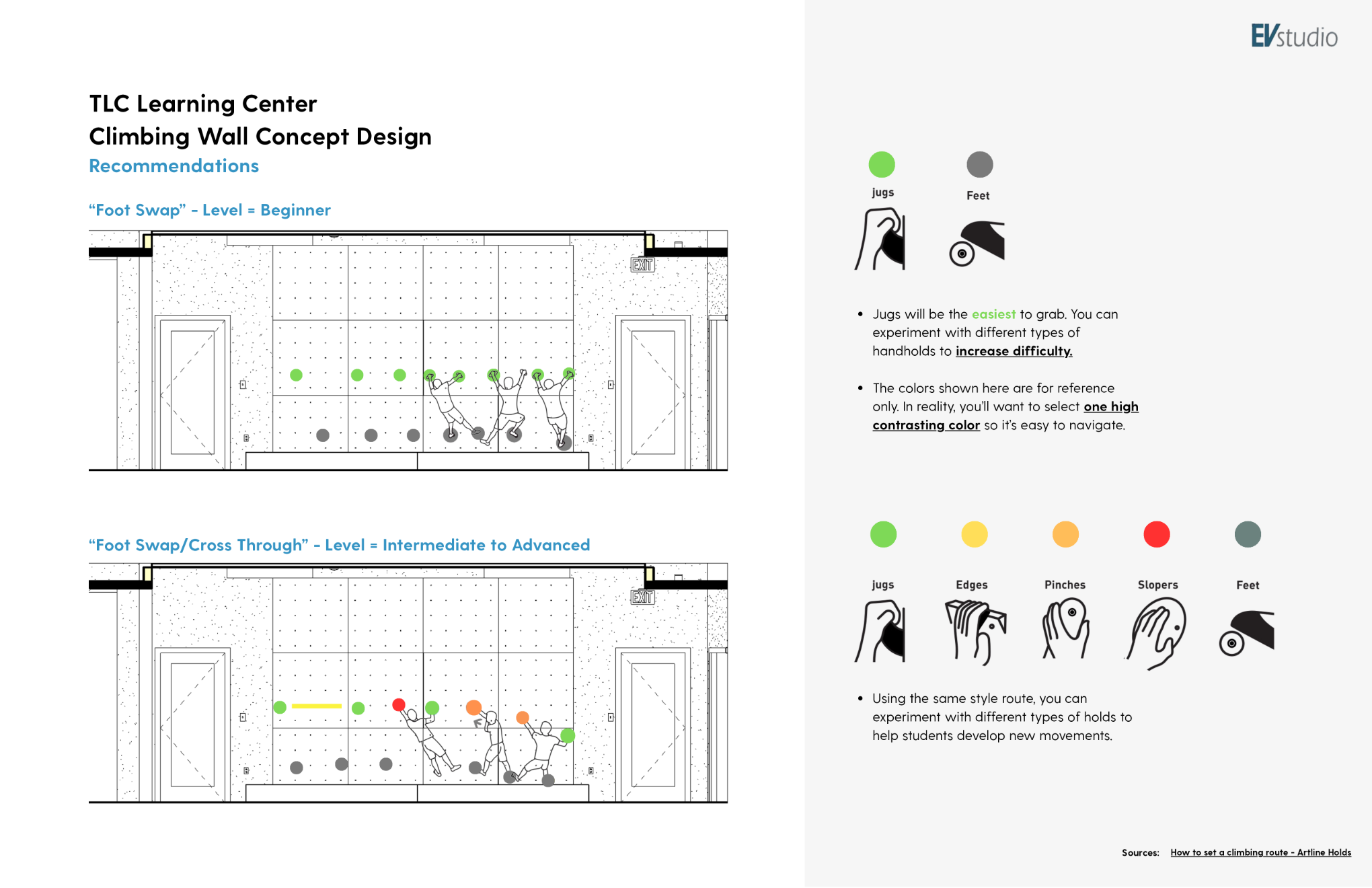
We took that idea a step further and created a climbing wall guide for TLC’s teachers and staff. The goal wasn’t to tell them exactly how the wall should be used, but to show them what was possible. We diagrammed different types of holds, levels of difficulty, horizontal and vertical routes, and examples of how changing a hold or route could create a completely different movement challenge.
A Different Way to Learn
Not every learning experience has to happen at a desk—or even look like learning. Suddenly, the wall becomes a place to practice listening, sequencing, decision-making, movement, persistence, or simply trying something unfamiliar.
There’s something really rewarding about seeing a hobby I love translate into a tool that others can learn and grow from. It’s also what I find so exciting about educational design—we’re not just creating spaces where teaching happens; we can create elements that become part of how teachers teach.
To learn more about this wonderful program, you can visit TLC using the link here.
This project was a Design-Build Project with Golden Triangle Construction (GTC).