When most people think about building design, they picture sketches, renderings, and floor plans. But some of the most important decisions happen before any of that begins.
At EVstudio, we’ve seen it time and time again: projects that start with thoughtful planning move faster, cost less, and encounter fewer surprises during design and construction.
Whether you’re developing a new multifamily community, renovating a school, expanding a manufacturing facility, or planning a custom home, investing time upfront can make all the difference.
What Is Pre-Design?
Pre-design is the discovery phase that happens before formal design work begins. It is when project goals, constraints, and opportunities are identified so the entire team can move forward with clarity.
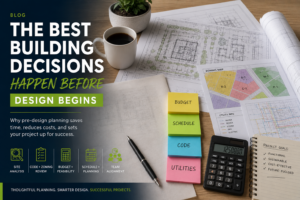
This phase often includes:
- Site analysis
- Zoning and code research
- Budget evaluation
- Utility review
- Feasibility studies
- Scheduling discussions
- Identification of project risks
Think of pre-design as the roadmap for your project. Without it, you may be making major decisions without all the information you need.
Why Pre-Design Matters
1. It Helps Confirm Project Feasibility
A project may seem straightforward until zoning restrictions, utility limitations, or site challenges come to light.
For example:
- Can the property support the intended use?
- Are there height or setback restrictions?
- Is there enough utility capacity?
- Are there drainage or grading concerns?
Answering these questions early helps determine whether the project vision is realistic.
2. It Saves Time and Money
Design revisions are much more costly after drawings are complete.
By addressing constraints upfront, teams can avoid:
- Redesign caused by code issues
- Unexpected site costs
- Permit delays
- Scope changes during construction
Pre-design helps reduce uncertainty and leads to more accurate budgets and schedules.
3. It Aligns the Entire Team
Owners, architects, engineers, contractors, and consultants all need a shared understanding of project goals.
During pre-design, the team can establish priorities such as:
- Budget targets
- Schedule milestones
- Sustainability goals
- Operational needs
- Future expansion plans
When everyone starts aligned, decision-making becomes more efficient.
4. It Creates Better Design Solutions
Strong design starts with a clear understanding of the project’s needs and limitations.
When architects and engineers understand the full picture from the beginning, they can develop solutions that are both creative and practical.
At EVstudio, our integrated architecture and engineering teams collaborate from day one to ensure design ideas are grounded in technical realities.
What EVstudio Brings to the Table
As a multidisciplinary firm, EVstudio offers in-house architecture, structural engineering, civil engineering, MEP engineering, surveying, and field services.
That means clients can evaluate critical issues early, including:
- Site development requirements
- Structural considerations
- Utility infrastructure
- Mechanical and electrical needs
- Cost and constructability implications
Instead of discovering conflicts later, our teams work together to identify opportunities and challenges from the start.
Pre-Design in Action
Imagine a developer planning a new apartment building.
Before design begins, the team investigates:
- Zoning allowances
- Parking requirements
- Utility access
- Stormwater needs
- Site grading constraints
If parking requirements reduce buildable area or utility upgrades are needed, those issues can be addressed before significant design effort is invested.
This approach leads to smarter decisions and fewer surprises.
Start with Confidence
Every successful project begins with a solid foundation, and that foundation is thoughtful planning.
Pre-design provides the insight needed to move forward confidently, make informed decisions, and set realistic expectations.
At EVstudio, we help clients navigate the early stages of development so their projects are positioned for success from the very beginning.