Utilizing Underground Detention to Create Beautiful Community Space
Look around any modern urban residential community. You see stylish townhomes, bright sidewalks, and green grass. You do not see a massive, deep hole holding rainwater. Yet, heavy storms hit these properties all the time. Where does all that water go?
Civil engineers solve this riddle using a hidden superpower. They design underground detention systems to manage stormwater runoff generated by the increase in impervious surfaces. These smart systems hide right beneath your feet. Ultimately, they transform modern land development and open the door for options to create beautiful spaces for residents while serving a hidden dual purpose.
The Problem with Urban Development
Rain falls on open fields and soaks deep into the grass. Nature handles the water with ease. However, urban developments cover that grass with roofs, sidewalks, roads, and parking lots. Rainwater cannot soak into these tough surfaces. Instead, the water rushes across the ground in huge waves.
This fast water causes major trouble. It can flood local roads and erode downstream landscapes. Therefore, cities require developers to catch and control this runoff. For decades, the default was to use open ponds to hold the extra water. Unfortunately, these traditional ponds create a brand new set of problems on dense urban development.
The High Cost of Open Ponds
Traditional ponds require a massive amount of surface land. Developers must carve out huge holes on the property. These ponds sit empty most of the time, and often look unappealing, collecting weeds and trash.
Worst of all, an open pond steals valuable space. Every square foot used for a pond is space you lose. In land development, lost space can mean fewer amenities for residents.
Project Spotlight: Allison Street Townhomes
Recently we had to solve this exact problem with the Allison Street Townhomes project in Lakewood. The project site had a very small footprint for stormwater detention, and Lakewood typically does not allow for underground detention in their jurisdiction. The original pond design required a very deep pond with 8’ tall walls. Due to the location of the detention facility adjacent to the front entrance and pedestrian walkways, fencing would have been required around most of the pond to keep pedestrians out. The pond design was on its way to be a fenced off, deep pit right at the community entrance, lowering the visual appeal of the community.
Transforming the Space
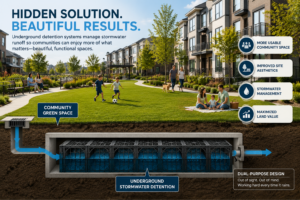
Instead of settling for a “pit of despair”, we presented to the city the benefits of shifting the entire design to an underground detention system. This solution transformed the entry space into a beautiful asset. By moving the water underground, the space can serve a dual purpose. Now, future residents will be able to enjoy an open green space instead of a fenced-in pit right outside their doors. After seeing the possibilities with the underground detention system, we were able to work with the city to ensure all required criteria were met with the design.
Better Living for Residents
This new green space adds immense value to the development. Residents will be able to use the open field every single day. For example, neighbors can hang out and have a sunny afternoon picnic.
The space also offers plenty of room for active fun. Kids can kick a soccer ball around or play catch. Pet owners can use the open field to play fetch with their dogs. This smart engineering choice turned a safety hazard into a vibrant neighborhood hub.
Smart Engineering for Future Growth
Underground systems do cost more money upfront than a typical surface pond. However, the Allison Street Townhomes is one example of the possibilities available with this technology. Underground detention maximizes land value, keeps communities safe, and creates amazing spaces to live.