Building From the Top Down: The Rise of Modular Construction
Changing the Way We Think About Building
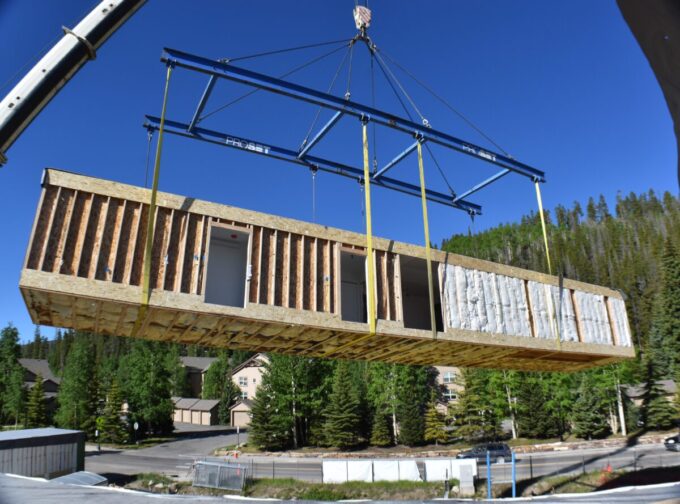
When I picture a construction site, I think of cranes swinging steel, crews pouring concrete, and months (or even years) of work before a building is finally complete. This has been reimagined. The
building process has been dramatically condensed. While workers are still pouring the foundation, another team can build fully finished hotel rooms inside a factory hundreds of miles away. Those rooms are loaded onto trucks, delivered to the job site, lifted into place by crane, and connected together until what was once an empty foundation becomes a completed building. It sounds backwards. But that’s exactly what modular construction is.
As someone just beginning my career in structural engineering, this is one of the things that excites me most about the industry. Construction is one of the oldest professions in the world, yet it’s constantly evolving. Every generation of engineers, architects, and builders has found new ways to improve how we design and construct the spaces around us. Just because something has been done the same way for decades doesn’t mean we can’t challenge it. Modular construction is a perfect example of that mindset.
Instead of asking, “How have we always built buildings?” it asks, “How could we build them better?”
What Is Modular Construction?
Permanent modular buildings aren’t temporary structures, and they aren’t manufactured homes. They’re designed to meet the same local building codes as buildings constructed entirely on-site, including the same structural, fire, energy, and life-safety requirements.
The biggest difference isn’t how they’re built – it’s where they’re built.
Instead of constructing every room at the project site, large sections of the building, called modules, are built inside a climate-controlled factory. Once complete, they’re transported to the site, lifted into place by crane, and connected to create the finished building. By the time construction is complete, most people would never know the building wasn’t assembled entirely on-site.
Each module is a fully finished section of the building, not just an empty box.
Before it ever leaves the factory, a module may already include:
- Structural framing
- Insulation
- Drywall
- Windows and doors
- Electrical wiring
- Plumbing
- HVAC components
- Cabinets and countertops
- Flooring
- Bathroom fixtures
- Paint and interior finishes
Depending on the project, modules can leave the factory up to 95% complete.
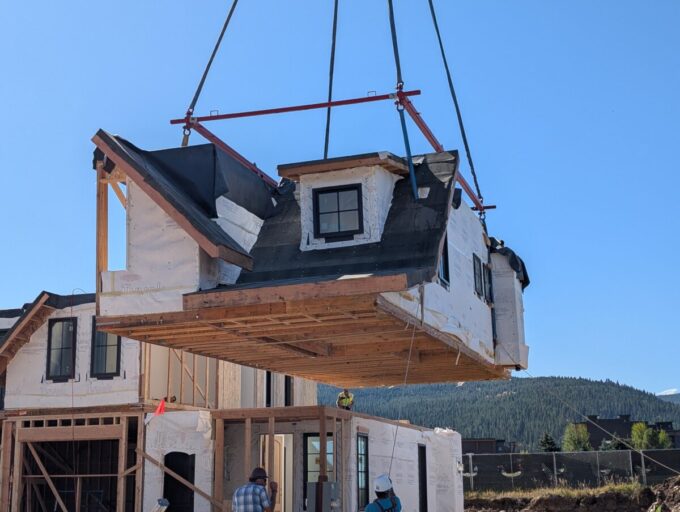
Once they arrive on-site, cranes carefully place each module on the foundation. Crews then connect the structural framing, plumbing, electrical, and mechanical systems before completing the exterior finishes and the interior joints where modules meet. When the project is finished, the building performs and looks just like one that was built entirely on-site.
How Does It Work?
One of the biggest advantages of modular construction is that two major phases of the project happen at the same time.
While crews are preparing the site (completing earthwork, foundations, utilities, and grading) the building itself is already being constructed inside a factory. Because the factory isn’t affected by random conditions such as rain, snow, or extreme temperatures, production can continue regardless of the weather.
Once the modules are complete, they’re transported to the project site, where cranes lift them into place and crews connect everything together. Instead of following the traditional sequence of foundation, structure, and then interior finishes, modular construction overlaps those activities, often reducing the overall construction schedule by several months.
To me, one of the coolest parts is seeing construction borrow ideas from manufacturing. Rather than building everything from scratch on-site, portions of the building are assembled with the consistency and efficiency of an assembly line while still meeting the same engineering standards as traditional construction.
Why More Developers Are Choosing Modular
The biggest advantage is time.
Finishing a project months earlier can mean:
- Earlier occupancy
- Earlier rental income
- Lower financing costs
- Fewer weather-related delays
Factory construction also offers more consistent quality control, improved worker safety, reduced material waste, and greater schedule predictability.
Modular construction isn’t automatically less expensive, but many owners find the shorter construction schedule creates significant long-term value.
Could Modular Help Address Housing Challenges?
As communities across North America continue to face housing shortages and rising construction costs, the industry is looking for new ways to build more efficiently without compromising quality.
Modular construction isn’t a silver bullet, but it has the potential to be part of the solution.
By reducing construction time, improving efficiency, and minimizing waste, modular projects can help deliver apartments, workforce housing, student housing, hotels, and senior living communities more quickly than many traditional methods. Finding ways to build faster without sacrificing quality is becoming increasingly important. That’s exactly where modular construction shines.
Why This Matters to Engineers
What I find most exciting about modular construction is that it challenges us and to think differently and be creative.
Engineers aren’t just designing the finished building. They’re designing how that building is manufactured, transported, lifted, assembled, and ultimately occupied. Every module has to safely withstand factory fabrication, transportation, crane lifting, and installation before it ever becomes part of the completed structure.
That level of coordination between architects, engineers, manufacturers, and contractors is what makes modular construction such an interesting engineering challenge.
More than anything, it reminds me that engineering is about solving problems. Sometimes that means designing a stronger beam or a better connection. Other times, it means rethinking an entire construction process that’s been used for generations.
Looking Ahead
Modular construction won’t replace every traditional building, and it shouldn’t.
Every project has different goals, budgets, and site constraints. But as labor shortages, sustainability goals, and housing demand continue to shape the industry, modular construction is becoming an increasingly valuable tool.
For a young engineer, that’s an exciting place to be.
The opportunity isn’t just to design the next generation of buildings, it’s to help shape the next generation of construction.
Considering Modular Construction?
Every project is different, and the best construction method depends on your schedule, site conditions, budget, and long-term goals.
At EVstudio, our architects, structural engineers, civil engineers, MEP engineers, and interior designers collaborate from the earlie
st stages of design to determine the right solution for every project. Whether that’s modular construction, traditional construction, or a combination of both, our focus is on delivering thoughtful, efficient, and lasting designs.
If you’re exploring modular construction for your next project, we’d love to start the conversation.