How Colorado’s Electric Ready, Solar Ready, and Low Energy Codes Are Reshaping Electrical Design
Colorado’s Model Electric Ready and Solar Ready Code and the newer Model Low Energy and Carbon Code (MLECC) are changing how designers approach electrical systems in new buildings. Rather than requiring immediate all-electric equipment, solar arrays, or EV chargers, these codes ensure buildings are “ready” for those technologies later. The goal is simple: reduce costly retrofits while advancing Colorado’s long-term electrification and clean energy targets.
Planning for Future Electric Mechanical Systems
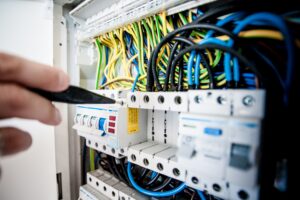
The most significant impact involves accommodating future all-electric mechanical systems. When designers install gas-fired heating, water heating, or other combustion equipment, they must also plan for electric replacements. That means dedicated branch circuits, panel space, and appropriately located receptacles or junction boxes. For residential and small commercial projects, designers must also reserve service capacity. As a result, this added planning often calls for larger services and distribution equipment than traditional designs.
Building in EV Charging Readiness
The codes also address electric vehicle charging. Designers must reserve capacity and provide conduit pathways to designated parking areas, so chargers can be added later with minimal disruption. Consequently, electrical engineers coordinate early with civil, architectural, and site teams to identify EV-ready spaces. As EV adoption grows, these provisions help owners avoid expensive parking-lot and service upgrades down the road.
Designing for Solar-Ready Roofs
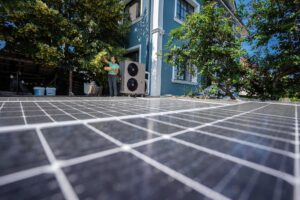
Solar readiness is another key consideration. Designers must reserve panel space for future solar connections and route pathways from solar-ready roof zones to the service equipment. In addition, roof layouts must preserve suitable areas for future photovoltaic systems. This requires close coordination among electrical, architectural, and structural disciplines, along with reserved panel capacity shown directly on the drawings.
What the MLECC Adds
The MLECC, based on the 2024 IECC, goes a step further. It folds in the electric-ready and solar-ready provisions and adds new demand-side requirements. Notably, many new systems—heating, cooling, water heating, and lighting—must be demand-response capable. Therefore, designers now plan control wiring and appliance connections that let utilities help manage electrical loads. For jurisdictions updating codes after July 1, 2026, the MLECC becomes the new minimum energy code.
Designing for Tomorrow, Not Just Today
Ultimately, these codes shift electrical design from meeting only today’s loads to anticipating tomorrow’s demands. While they add upfront coordination and modestly affect construction costs, they deliver real long-term value by simplifying future upgrades to electric mechanical systems, EV charging, and on-site solar. The payoff is a more flexible, resilient, and sustainable built environment—one prepared for Colorado’s evolving energy landscape.
At EVstudio, our electrical engineers coordinate across every discipline to keep your project code-compliant and future-ready.
Contact EVstudio to plan the electrical design for your next Colorado project.
Learn more from the Colorado Energy Office Building Energy Codes Toolkit: https://energyoffice.colorado.gov/building-energy-codes-toolkit