
Hurricane-Resistant Construction: Why a Continuous Load Path Matters Most

When people think about designing a building for a hurricane, the first thing that usually comes to mind is wind speed. While wind speed is certainly important, experienced engineers know that the real key to hurricane-resistant construction is the load path.
Simply put, a load path is the route that wind forces take through a building. During a hurricane, the wind tries to lift the roof off, push walls over, and pull the building apart. Those forces must travel from the roof, through the walls, and into the foundation. If a weak connection exists anywhere along that path, the building will likely fail there first. The IRC specifically requires a continuous load path that transfers wind uplift forces from the roof all the way to the foundation.
Why Wind Speed Isn’t the Whole Story
Many people assume that larger beams, stronger trusses, or thicker walls automatically create a hurricane-resistant building. In reality, a structure can have adequately sized framing members and still fail if the connections between those members are weak.
Think of a building like a chain—it is only as strong as its weakest link.
After major hurricanes, engineers often find that the framing itself remained intact, but a connection failed. Once the roof starts to separate from the walls, or a garage door blows in, internal wind pressures increase dramatically. Damage can then spread rapidly throughout the structure.
Stronger Connections Create a Continuous Load Path
The main difference between standard wood-framed construction and wood-framed construction in a hurricane zone is the amount of hardware used throughout the building’s connections.
In some cases, builders can improve performance by increasing the number of sill bolts that connect sill plates to the foundation. Other connections that typically rely on nails often require additional hardware or different fastener types to resist hurricane loads.
Most people recognize truss and rafter hold-down straps because they help secure the roof to the structure. However, higher uplift loads in hurricane-prone regions require engineers to re-evaluate many other connections as well.
For example, top and bottom wall plates connected to studs may require additional hardware to provide greater tension capacity. In some cases, uplift forces require a direct connection between roof rafters and wall studs. This reduces the number of potential failure points in the load path.
Roof sheathing attachment also becomes more important. Builders often reduce nail spacing to increase resistance. In extreme wind zones, engineers may specify screws because they provide much greater withdrawal capacity than nails.
Protecting the Building Envelope
Structural hardware is only part of the solution. Hurricane-resistant construction also requires stronger building envelope components.Windows and doors must carry impact ratings that allow them to withstand flying debris during a storm. Garage doors in hurricane wind zones must also meet the required design wind speeds.
Keeping the building envelope intact is critical during severe storms. Once the envelope is breached, internal pressure rises quickly. Those added pressures increase the loads on the roof and walls and can trigger structural failure.
Florida’s High Velocity Hurricane Zone (HVHZ) Requirements
Florida has additional requirements for buildings located in High Velocity Hurricane Zones (HVHZ). These provisions go beyond increasing the design wind speed.
Instead, Florida places particular emphasis on maintaining the building envelope and preserving structural continuity during extreme wind events. Enhanced connector requirements, impact-rated openings, approved roofing systems, secondary water barriers, and specialized HVHZ provisions all help create a continuous load path. Together, these features keep the roof attached, the walls connected, and the building enclosed throughout the storm.
The Bottom Line: Connections Make the Difference
When you compare a hurricane-resistant building to a standard building, the framing may look surprisingly similar. The biggest differences usually appear in the connections.
Hurricane straps, hold-downs, anchor systems, reinforced roof attachments, and impact-resistant openings all work together to create a continuous load path. That load path transfers wind forces safely from the roof to the foundation.
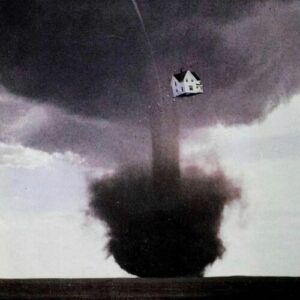
At the end of the day, when a storm starts, no one wants their house gone with the wind.