How AI Is Transforming Structural Design — What We’re Learning at EVstudio
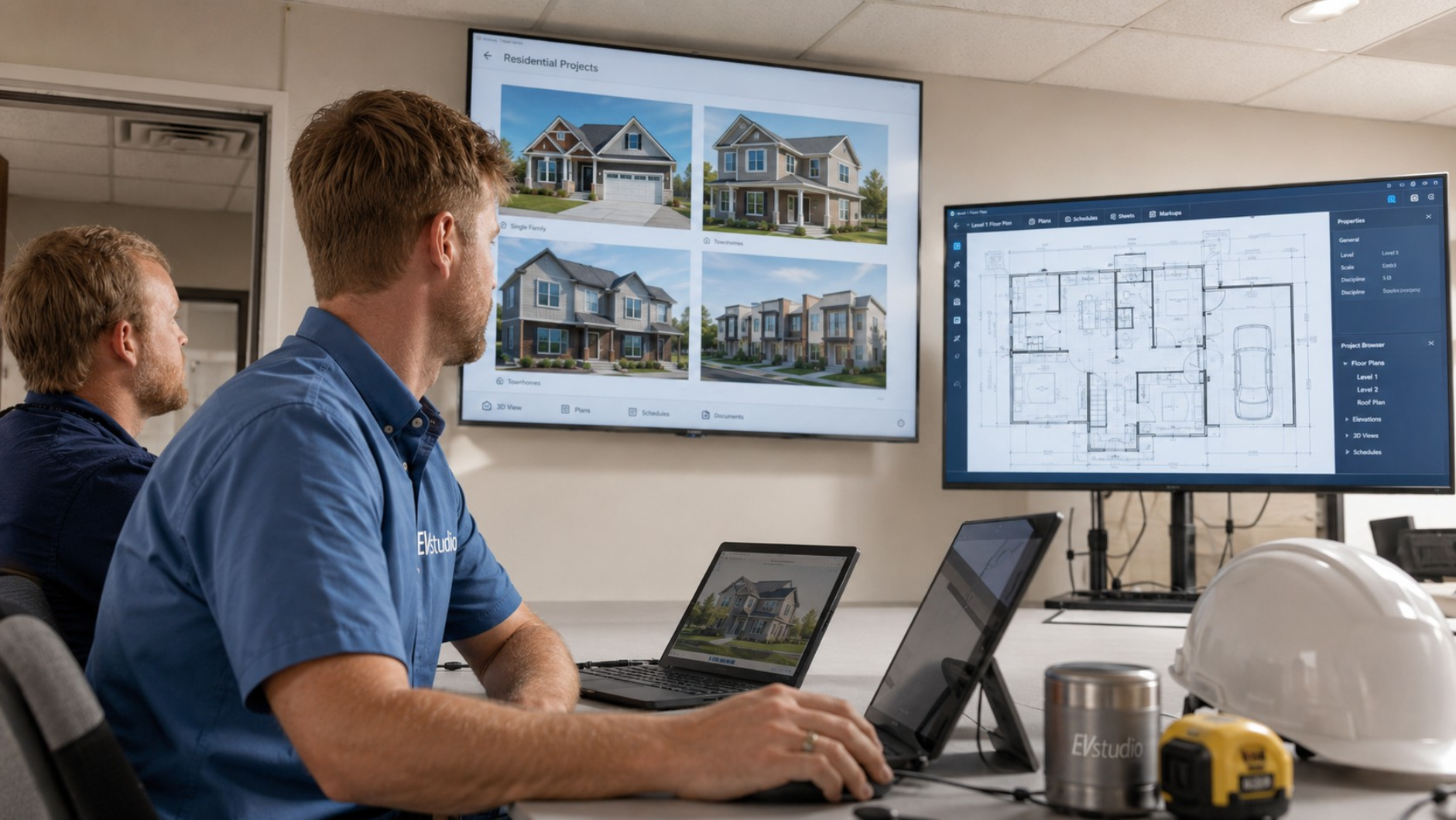
Artificial intelligence is starting to reshape structural engineering in a practical way. Not by replacing engineers, but by giving us better tools to explore ideas and make decisions earlier.
At EVstudio, we’ve recently had introduction meetings with platforms like Genia and Lava, and we’ve also been evaluating tools like InspectMind.We’re not using these systems in our current projects, but we are taking a close look at how they could fit into our future workflow and where they might add real value. What stands out most is how these tools change the beginning of a project.
Rethinking Early Design
Early structural design is often limited by time. Typically, an engineer develops few variations of framing concepts and moves forward. This process is heavily reliant on our many decades of expertise and experience to determine the “best” layout for each clients specific needs.
Tools like Genia and Lava shift that process. Instead of starting from scratch, they generate several viable structural concepts in a short amount of time. That allows engineers to focus less on building the first model and more on comparing options and refining the best solution. For production home builders, where similar plans are repeated across multiple communities, that ability to quickly evaluate and refine options can have a meaningful impact at scale. It’s a subtle shift, but an important one.
Better Decisions, Earlier
Early decisions drive cost, schedule, and constructibility. The challenge has always been having enough information at that stage. AI tools help fill that gap. Engineers can review multiple layouts side by side and understand how each option affects performance, material use, and constructibility before committing to a direction. That doesn’t replace engineering judgment. It gives it more clarity.
Supporting Client Priorities
Every project is different. Some clients prioritize cost. Others care more about speed or simplicity in construction. These tools make it easier to evaluate those tradeoffs early. One framing layout might reduce material quantities, while another simplifies installation in the field. Being able to see those differences upfront leads to more productive conversations with clients and project teams.
This is especially relevant for production builders, where small improvements in one plan can translate into significant cost and schedule gains across dozens or hundreds of homes.
A Different Role for AI
While Genia and Lava focus on generating design options, InspectMind approaches the process from the review side. It uses AI to help identify potential issues during plan review, which is often one of the more time-consuming and iterative parts of a project. Instead of manually catching every inconsistency, engineers can use it as an added layer of review to flag missing information, coordination gaps, or potential code-related concerns early. That can help reduce repeated redlines, minimize back and forth between teams, and shorten review cycles. It also has the potential to improve consistency across projects, especially when multiple engineers are working within the same standards.
Over time, tools like this could support faster permitting, cleaner plan sets, and fewer downstream surprises during construction. It’s a different application of AI, but one that directly addresses a real bottleneck in how projects move forward.
Where We Are Now
At EVstudio, we are still evaluating these tools carefully. Adoption isn’t just about capability. It’s about reliability and making sure the technology genuinely improves how we deliver projects. For now, we’re learning, testing, and asking the right questions.
Looking Ahead
AI is becoming part of the design process. The opportunity is to use it thoughtfully. If applied well, these tools can help engineers explore more options, make better decisions earlier, and deliver more efficient projects. The tools will continue to evolve, but the responsibility stays the same.
Good engineering still comes down to experience, judgment, and knowing how to apply the right solution to each project.