Why Bringing Engineers in Early Leads to Better Buildings
In many construction projects, engineering disciplines are brought into the process after major architectural or development decisions have already been made. While this approach may seem efficient at first, it can often create coordination challenges, redesigns, budget impacts, and schedule delays later in the project lifecycle.
An integrated design process changes that.
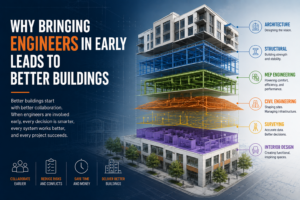
When engineers are involved early, project teams gain valuable insight during the planning and conceptual phases that can improve coordination, reduce conflicts, and create more efficient, buildable solutions. At EVstudio, our multidisciplinary approach allows Architecture, Structural Engineering, Civil Engineering, MEP Engineering, Survey, and Interior Design teams to collaborate from the start — helping clients make informed decisions earlier and move projects forward with greater confidence.
Early Coordination Creates Smarter Design Decisions
Every discipline impacts the success of a project. Structural systems influence layouts. Civil constraints affect site planning. Mechanical requirements shape ceiling space and building functionality. Electrical and plumbing systems impact long-term operational performance.
When these conversations happen early, teams can proactively identify challenges before they become costly problems during construction documents or permitting.
For example, involving structural engineers during conceptual planning may help optimize column spacing, framing systems, or material selections before the architectural layout becomes fixed. Early civil coordination can uncover grading, drainage, utility, or access considerations that may significantly affect site design.
Rather than reacting to conflicts later, integrated teams can design with those realities in mind from day one.
Better Collaboration Leads to Better Outcomes
Projects move more efficiently when disciplines are communicating consistently throughout the process.
Instead of separate consultants working in silos, integrated teams can coordinate in real time, align project goals, and quickly solve challenges together. This collaborative approach often reduces redesign efforts, minimizes RFIs during construction, and helps maintain project schedules.
At EVstudio, our in-house teams work side-by-side across disciplines, allowing coordination to happen faster and more naturally throughout each phase of design. This creates a smoother experience not only for the design team, but also for owners, contractors, and consultants involved in the project.
Early Engineering Input Can Support Budget and Schedule Goals
One of the biggest advantages of early engineering involvement is the ability to evaluate options before decisions become expensive to change.
During early design phases, engineering teams can help assess:
- Structural system efficiencies
- Utility and infrastructure requirements
- Mechanical system impacts
- Site development constraints
- Long-term operational considerations
- Constructability and phasing opportunities
Addressing these items early often helps reduce surprises later in the project and supports more predictable budgeting and scheduling.
This is especially valuable in fast-paced project types such as multifamily, commercial, industrial, and offsite construction, where coordination and speed are critical to project success.
Integrated Design Supports Long-Term Project Success
Successful buildings require more than strong architecture alone. They depend on how well every system works together.
An integrated approach helps create buildings that are not only visually successful, but also efficient, functional, and easier to construct and operate over time.
By bringing engineers into the conversation early, project teams can improve communication, streamline coordination, and create solutions that better support the project’s overall goals from concept through construction.
At EVstudio, we believe the best projects happen when collaboration starts early. Our multidisciplinary teams work together from the beginning to help clients navigate complex challenges, reduce inefficiencies, and deliver thoughtful, coordinated design solutions.